California enforces strict balcony code requirements that every property owner, landlord, HOA board member, and building manager must understand and comply with — or face serious consequences.
The goal of these regulations is straightforward: to ensure that balconies, decks, and other exterior elevated elements in residential and commercial buildings follow clear safety standards designed to reduce fall hazards, prevent water intrusion, and maintain structural integrity over time.
California’s balcony safety framework is built around two landmark pieces of legislation — Senate Bill 721 and Senate Bill 326 — each targeting a different type of property.
SB 721 applies to rental buildings with 3+ units. It requires inspection of all Exterior Elevated Elements (EEEs) — balconies, decks, stairways, walkways — every six years, with a minimum 15% sampling per element type and a 120-day repair window after inspection.
The initial deadline was January 1, 2026.
SB 326 applies to condominiums and HOA-governed buildings. It requires inspections every nine years using a statistically rigorous sampling method (95% confidence / 5% margin of error).
The initial deadline was January 1, 2025 — meaning many properties are already in the compliance window and subject to daily fines.
Code Standards All Balconies Must Meet
California’s Building Code establishes specific construction standards regardless of when an inspection is due:
- Railing height: Minimum 42 inches; openings must not allow a 4-inch sphere to pass through; must withstand 200 lbs of lateral load
- Slope and drainage: Minimum 2% slope directing water away from the building to prevent wood rot
- Waterproofing: Membranes, flashing, and coatings must be inspected for integrity and proper function
- Structural components: Joists, beams, posts, and connections must be free of decay, corrosion, or deterioration
SB 721 — Multifamily Rental Buildings
SB 721, codified under California Health & Safety Code §17973, applies to rental apartment buildings with three or more dwelling units that contain exterior elevated elements (EEEs) six feet or more above ground.
The law requires inspections of all qualifying EEEs — including balconies, decks, stairways, and elevated walkways — at least once every six years.
Inspectors must examine a minimum of 15% of each EEE type through direct visual inspection, including exploratory openings that expose concealed framing where moisture damage most commonly occurs.
The initial inspection deadline was extended to January 1, 2026, through Assembly Bill 2579. Following the inspection, property owners have 120 days to complete all identified repairs.
SB 326 — Condominiums and HOAs
SB 326, codified under Civil Code §5551, applies to condominium associations and HOA-governed buildings. The initial inspection deadline for this law was January 1, 2025, and has not been extended — meaning condominium associations are already in the compliance window, and properties without completed inspections are now subject to daily penalties.
SB 326 requires inspection every nine years and uses a more rigorous statistical sampling methodology — a 95% confidence level with a 5% margin of error — which often results in a larger proportion of elements being examined than the 15% minimum under SB 721.
HOA boards must review reports at open meetings and provide written summaries to all unit owners within 15 days.
Regardless of current regulations, contact an inspector immediately if you notice soft or spongy decking, water staining on ceilings below balconies, rusting fasteners, peeling waterproofing, mold growth, or unstable railings.
These are signs of progressive deterioration that can quickly become a structural emergency.
Our team at US Commercial Building Inspections provides comprehensive balcony and exterior elevated element inspections for commercial and multifamily properties throughout San Diego, Orange, Los Angeles, Riverside, and San Bernardino Counties.
Our team of licensed and certified inspectors understands California’s evolving balcony code requirements inside and out — and we help property owners stay compliant, document their due diligence, and protect their investments and their tenants.
What to Expect During a Balcony Inspection
A proper California balcony inspection — conducted by a licensed architect, civil or structural engineer, or a qualified contractor holding an A, B, or C-5 license — goes far beyond a visual once-over.
Inspectors are required to create exploratory openings that expose concealed structural members, particularly in areas where moisture accumulates and wood decay is most likely to be hidden from view.
A thorough inspection covers:
- Railing height, spacing, and structural stability
- Balcony slope, drainage, and waterproofing membrane condition
- Load-bearing components including joists, beams, posts, and connection hardware
- Signs of wood rot, fungal growth, rust, or corrosion
- Waterproofing layers, flashing, and protective coatings
- Compliance with current California Building Code standards
Contact US Commercial Building Inspections at 619-473-2133
Proudly Serving San Diego, Orange, Los Angeles, Riverside & San Bernardino Counties
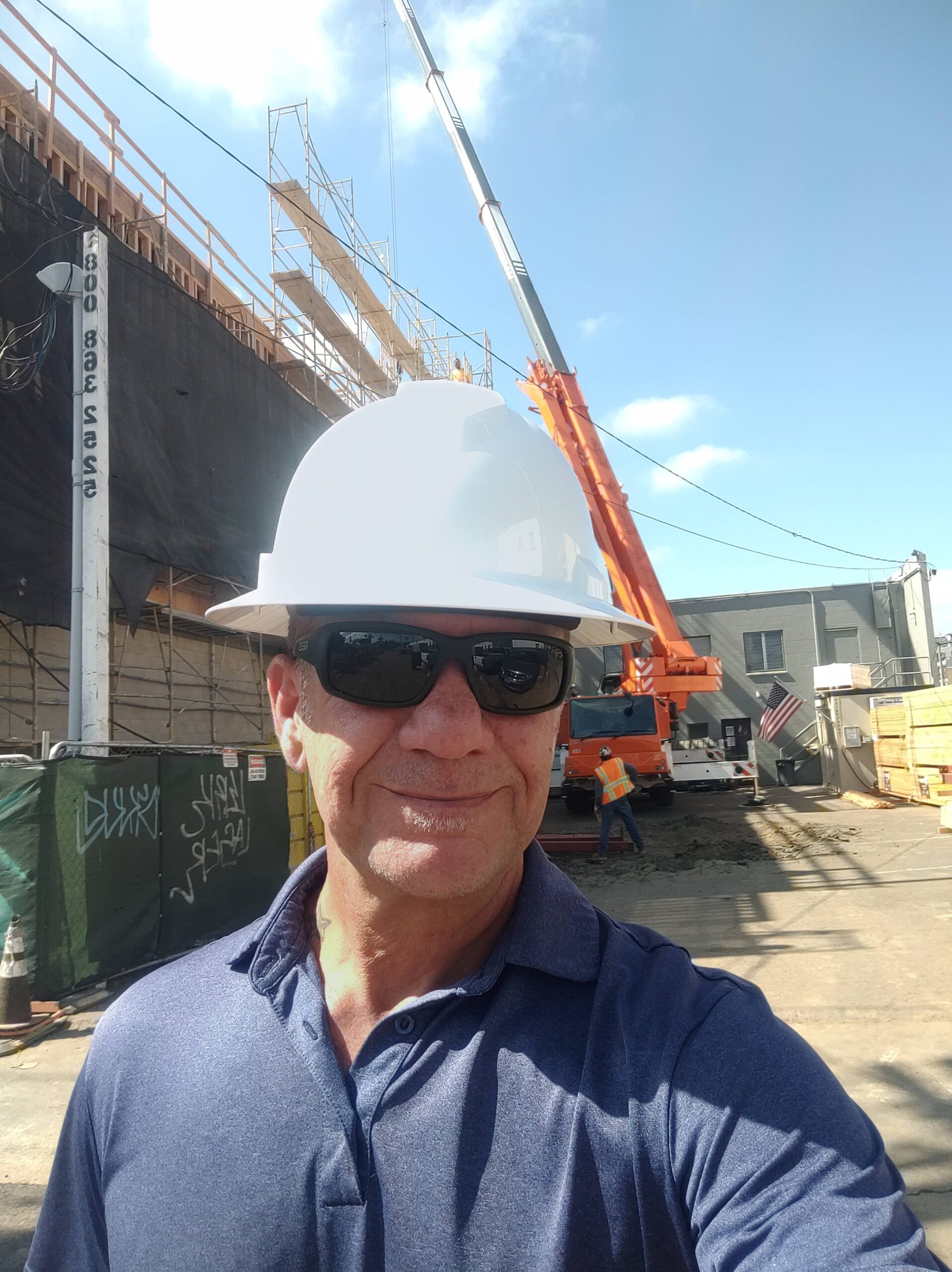
Maurice is the Chief Inspector for U.S. Commercial Building Inspections of Southern California. He is a Certified Commercial Property Inspector (CCPI) with over 25 years of extensive experience in real estate, construction, restoration, remediation, and business development.
He holds numerous inspection certifications with the Commercial Property Inspectors Association (CCPIA), the International Association of Home Inspectors (InterNACHI), and he is also a Certified Mold Inspector (CMI), Certified Mold Remediator (CMR), and a member of the Indoor Air Quality Association (IAQA).
