

Pasadena, CA Commercial Property InspectionsServing Los Angeles County and Southern California
Property Condition Assessments, environmental site assessments, roof evaluations and building code consulting for Pasadena commercial property.
- 5.0 Google rating
- ASTM E2018 PCA standard
- 1–3 day report delivery
- CCPI certified inspector
Pasadena commercial property inspections routinely involve historic-district review and the city's own seismic retrofit requirements alongside ordinary condition work. Our Property Condition Assessments document original building fabric with the care that review process demands, building code consulting maps the retrofit and permitting path, and commercial roof inspections covers tile, built-up and modified-bitumen assemblies. See San Diego commercial inspections.
Pasadena's commercial inventory is old, architecturally significant and closely regulated by a city that reviews exterior work far more strictly than its neighbors. Condition findings here almost always come with a permitting and design-review dimension attached.
What we inspect in Pasadena
- Old Pasadena historic masonry and early concrete retail and office
- Mid-rise Colorado and Lake corridor office with curtain wall and central plants
- Medical office near Huntington Hospital with imaging, generator and medical gas systems
- Institutional campuses and pre-1978 apartment product
How a Pasadena inspection runs
Every engagement starts with a scope call: asset type, square footage, building age, the lender's requirements and your closing date. We walk the property with the on-site manager where possible, document the roof, envelope, structure, mechanical, electrical, plumbing, site and life-safety systems, and photograph every deficiency with a location reference.
You receive the report in three to five business days. It includes an immediate repair table priced at current San Diego County contractor rates, a one to five year capital reserve schedule, remaining useful life estimates for major systems, and an executive summary your lender can read in two minutes.
Why local matters
Building stock, climate exposure and permit history differ across Southern California. Pasadena has its own permitting history, jurisdiction requirements and construction eras, and knowing them keeps the report focused on the conditions that actually drive cost. We inspect commercial property only, so nothing in the report is borrowed from residential practice.
Pasadena submarkets and building stock
Old Pasadena holds 1890s–1920s masonry and early concrete retail and office inside a designated historic district, with basements, light wells and original storefronts still in service. The Colorado Boulevard and Lake Avenue corridors carry mid-rise office and bank buildings from the 1960s–1980s with aging curtain wall and central plant equipment. The Huntington Hospital area and South Lake add medical office with imaging and generator loads, and the city carries a substantial institutional inventory — private schools, churches and civic buildings — plus pre-1978 apartment stock along Walnut and Orange Grove.
Local compliance angle
Pasadena's seismic retrofit ordinance and design review both apply
Pasadena adopted its own mandatory seismic retrofit requirements for soft-story wood-frame and non-ductile concrete buildings, administered by the city's Building Division with its own screening, evaluation and compliance schedule, in addition to its long-running unreinforced masonry program. Because much of the commercial core sits in a landmark district or contains designated historic resources, exterior repairs identified in an assessment also route through the city's Design Commission or Historic Preservation review. We document retrofit status from city records and flag where a repair recommendation carries a review path that affects both cost and schedule.
Reference: City of Pasadena mandatory seismic retrofit program (soft-story and non-ductile concrete); Pasadena historic preservation review
How Pasadena assignments typically run
Historic and institutional buildings need longer field time and a records review that most templates skip.
- Typical asset size: 5,000–150,000 sf office, retail, medical and institutional
- Common scope: PCA plus Phase I ESA, plus city records review for retrofit and preservation status
- Referrals: structural engineering for non-ductile concrete and URM screening
- Report delivery: 1–3 business days
Services
Inspection services available in Pasadena

Property Condition Assessment
Lender-ready PCA reports for acquisitions, refinancing and portfolio reviews, with immediate repair and capital reserve tables.
View scope
Phase 1 Environmental Site Assessment
Environmental site assessments that surface recognized environmental conditions before liability transfers to you.
View scope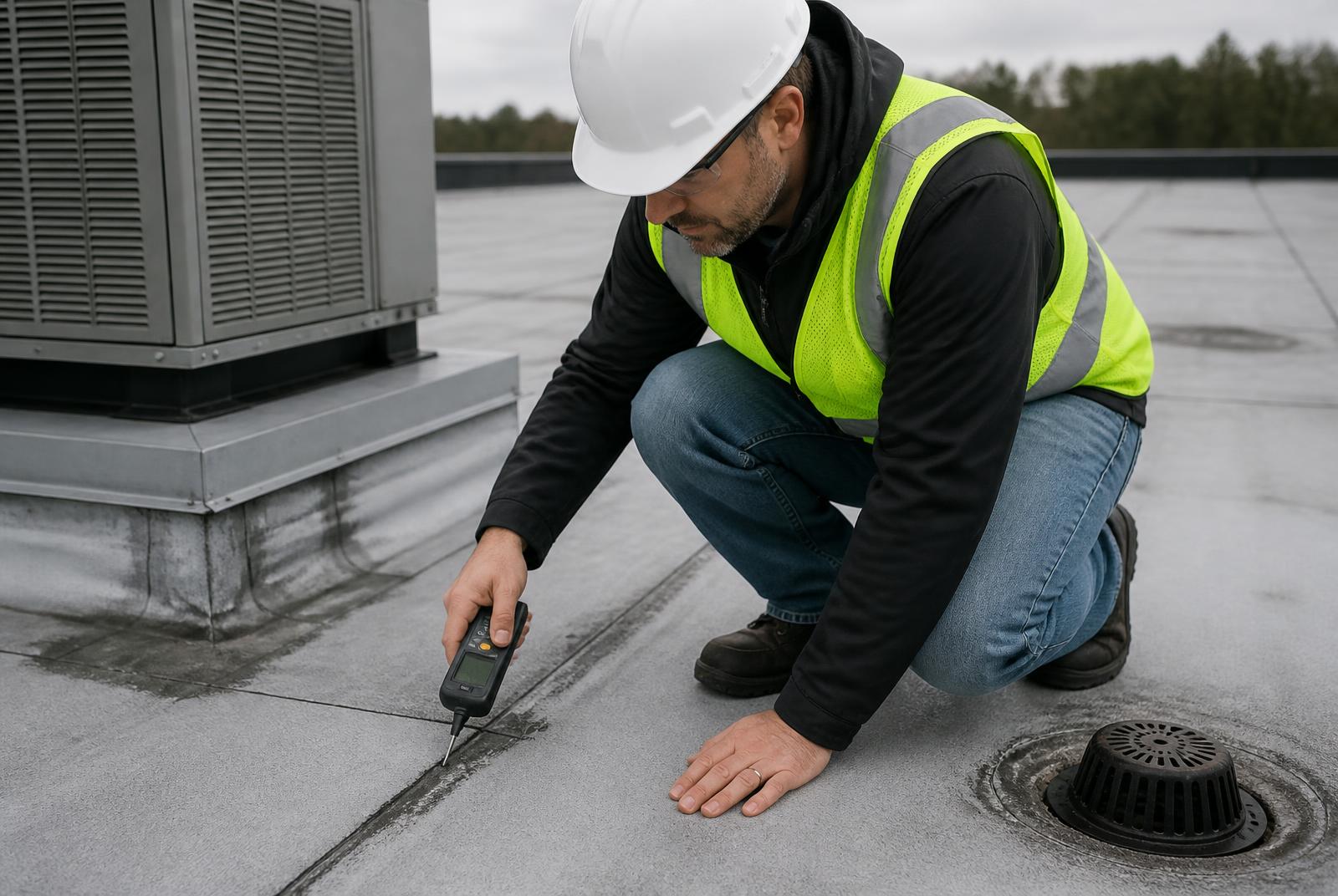
Roof Inspections
Membrane, flashing, drainage and penetration evaluation with moisture readings and remaining-life estimates.
View scopeRelated
Related cities and services near Pasadena
Neighboring submarkets
- Commercial property inspections in Downtown Los Angeles, CA
Pre-war office · adaptive reuse
- Commercial property inspections in Commerce & Vernon, CA
Heavy industrial · food processing
- Commercial property inspections across Los Angeles County
Regional coverage
- Commercial property inspections in Long Beach, CA
Port-adjacent industrial · older mixed-use
Services for Pasadena property
- ASTM E2018 Property Condition Assessment for Pasadena historic office and medical & institutional
ASTM E2018
- Phase 1 Environmental Site Assessment in Pasadena
ASTM E1527
- Roof inspections for Pasadena commercial buildings
Drone documented
- Building code consulting for Pasadena permits and plan review
CBC · Title 24
- Lender field inspections on Pasadena assets
Lender formats
- Drone and thermal roof imaging in Pasadena
FAA Part 107
FAQ
Pasadena commercial inspection questions
What does a commercial property inspection in Pasadena cover?
A Pasadena inspection follows ASTM E2018 and documents the roof, envelope, structure, mechanical, electrical, plumbing, site and life-safety systems, with every deficiency photographed and located. In Pasadena, CA that most often means old Pasadena historic masonry and early concrete retail and office; mid-rise Colorado and Lake corridor office with curtain wall and central plants; medical office near Huntington Hospital with imaging, generator and medical gas systems. You receive an immediate repair table, a capital reserve schedule and an executive summary your lender can read in two minutes.
How long does a Pasadena inspection report take?
Most Pasadena assignments deliver in three to five business days from the site walk. Scope and fee are usually confirmed the same day you call 619-473-2133, and rush delivery is available when a closing or loan deadline requires it.
Which local code or compliance issues affect commercial buildings in Pasadena?
Pasadena adopted its own mandatory seismic retrofit requirements for soft-story wood-frame and non-ductile concrete buildings, administered by the city's Building Division with its own screening, evaluation and compliance schedule, in addition to its long-running unreinforced masonry program. Because much of the commercial core sits in a landmark district or contains designated historic resources, exterior repairs identified in an assessment also route through the city's Design Commission or Historic Preservation review. We document retrofit status from city records and flag where a repair recommendation carries a review path that affects both cost and schedule. We cite the applicable requirement in the report itself — reference: City of Pasadena mandatory seismic retrofit program (soft-story and non-ductile concrete); Pasadena historic preservation review.
Which Pasadena submarkets and property types do you inspect?
Old Pasadena holds 1890s–1920s masonry and early concrete retail and office inside a designated historic district, with basements, light wells and original storefronts still in service. The Colorado Boulevard and Lake Avenue corridors carry mid-rise office and bank buildings from the 1960s–1980s with aging curtain wall and central plant equipment. The Huntington Hospital area and South Lake add medical office with imaging and generator loads, and the city carries a substantial institutional inventory — private schools, churches and civic buildings — plus pre-1978 apartment stock along Walnut and Orange Grove.
What does a typical Pasadena engagement look like?
Historic and institutional buildings need longer field time and a records review that most templates skip. Typical asset size: 5,000–150,000 sf office, retail, medical and institutional. Common scope: PCA plus Phase I ESA, plus city records review for retrofit and preservation status. Referrals: structural engineering for non-ductile concrete and URM screening. Report delivery: 1–3 business days.
Do you also inspect property near Pasadena?
Yes. We inspect commercial property throughout Los Angeles County and the surrounding Southern California counties, including Downtown Los Angeles, Commerce & Vernon, Los Angeles County. One inspector covers multi-property portfolios so the reporting stays consistent.
Request a quote
Request a Pasadena inspection quote
Send the address, asset type and approximate square footage. We reply with scope and fee, usually the same business day.
619-473-2133
Mon–Fri 7:00am–6:00pm