
Scope & report
Can I use the inspection report to renegotiate the price?
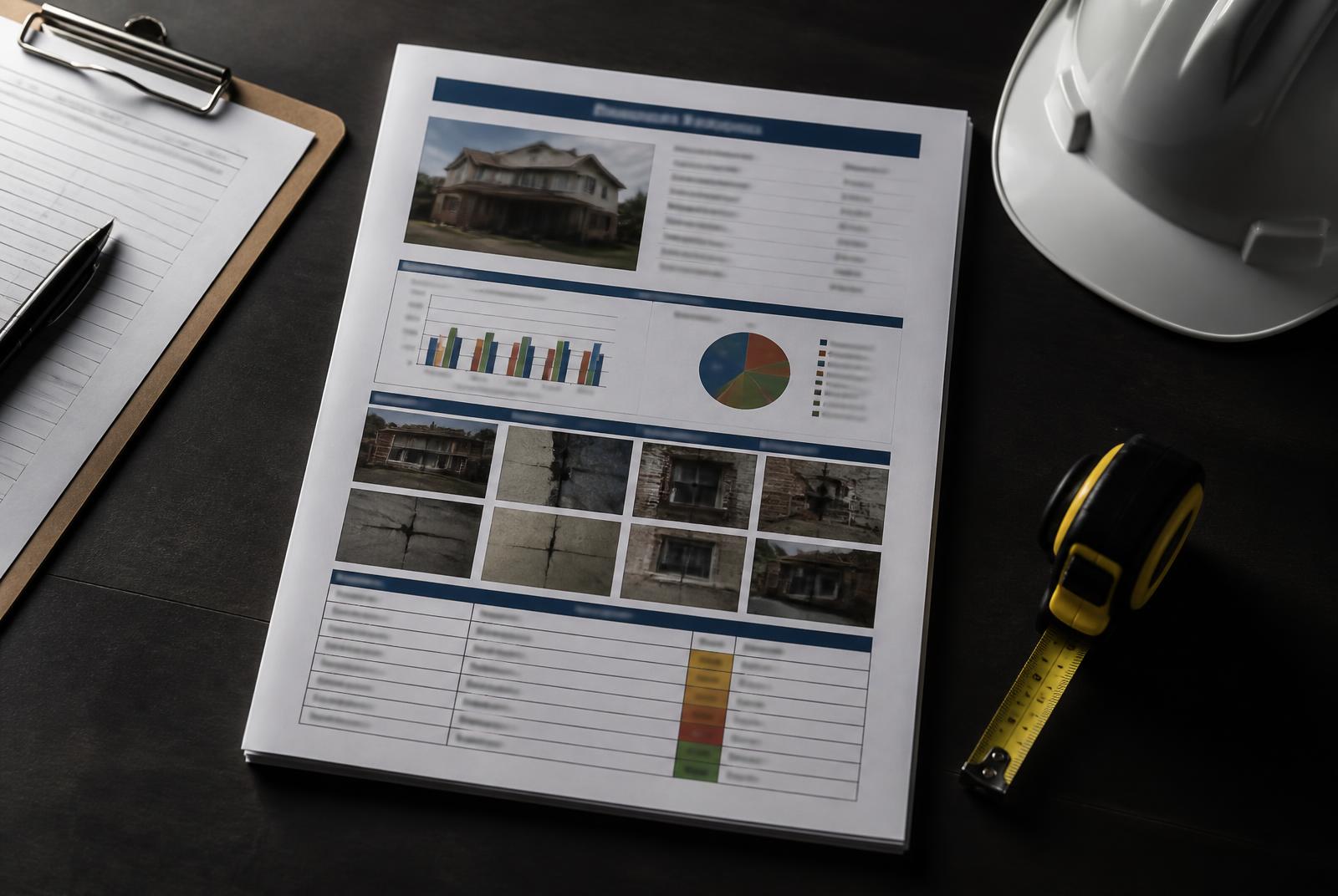
Yes, and a properly documented Property Condition Assessment is the most effective tool for it, because opinions of probable cost turn observations into a number a seller can evaluate. Retrades succeed when they are specific, sourced and delivered inside the contingency period.
All FAQ / Scope & report
Quick answer
Yes, and a properly documented Property Condition Assessment is the most effective tool for it, because opinions of probable cost turn observations into a number a seller can evaluate. Retrades succeed when they are specific, sourced and delivered inside the contingency period.
— U.S. Commercial Building Inspections (USCBI), commercial property inspectors in San Diego, CA. Serving 5 Southern California counties.
Why a PCA works in negotiation
Sellers discount vague objections and respond to documented numbers. A report that says "roof membrane at end of service life, 42,000 square feet, opinion of probable cost $394,000, photographs at figures 12-19" is a different conversation than "the roof looks old." The cost tables are what convert a finding into a credit.
What actually moves price
- Immediate repairs - safety, code and active-damage items the seller cannot dispute.
- Near-term capital - systems expiring in the first two or three years of your hold, which you underwrote as stabilized.
- Unpermitted work - an unpermitted mezzanine or tenant improvement creates a legalization cost and a leasing risk.
- Capacity constraints - an electrical service that will not support the tenant improvement in your business plan.
- Accessibility exposure - documented CBC Chapter 11B path-of-travel conditions that a permit application will trigger.
What rarely moves price
Ordinary wear, cosmetic finishes, and reserve items in years eight through twelve that you already modeled. Asking for a credit on a roof with nine years of life left signals you have not read your own report, and it weakens the items that deserve attention.
Three ways to structure the ask
- Price reduction - cleanest, and it lowers your basis and loan amount.
- Seller credit at closing - preserves reported price, funds your repair work.
- Seller performs the work - slowest and the hardest to control on quality; if you go this route, require permits, a licensed contractor and your sign-off before closing.
Timing and tone
Deliver the request inside the contingency period, in writing, with the report excerpts attached and one number at the bottom. Ask once, ask for what the evidence supports, and be prepared to proceed or walk. Buyers who retrade twice, or who ask for a number the report does not justify, lose credibility and sometimes the asset. Buyers who present a sourced, single, reasonable request get paid surprisingly often.
If the seller refuses
Then you know your true basis. The value of the report does not disappear when a seller says no; it becomes your year-one capital plan, your lender escrow negotiation, and your insurance and reserve budget.
Reviewed by

Maurice Bedard
Chief Inspector & Owner · CCPI, CMI, CMR
Maurice Bedard is the chief inspector and owner of U.S. Commercial Building Inspections, a Certified Commercial Property Inspector with more than 25 years in commercial real estate, construction, restoration and remediation across Southern California. He has personally inspected office, retail, industrial, multifamily and institutional buildings for buyers, owners, brokers and lenders throughout San Diego, Orange, Los Angeles, Riverside and San Bernardino Counties.
Reviewed by Maurice Bedard · Updated August 22, 2026
More about our inspectors · Questions about your building? Call 619-473-2133.
Related questions
People also ask
What is an immediate repair versus a capital reserve item?
An immediate repair is a deficiency that requires action now or within roughly twelve months, usually for safety, code, or to prevent accelerating damage. A capital reserve item is a system nearing the end of its useful life whose replacement is projected across the analysis period, typically ten or twelve years.
How does inspection fit into the due diligence period?
Order the Phase I ESA on day one because it has the longest lead time, engage the condition assessment in the first week, expect reports back between day 15 and day 25, and reserve the final week for pricing repairs and negotiating. A 30-day period is workable; a 10-day period requires rush scopes.
Who pays for a commercial property inspection, buyer or seller?
In commercial real estate the buyer almost always pays for the inspection, because the buyer orders it and owns the report. Sellers pay when they commission a pre-listing assessment, and borrowers pay for lender-required Property Condition Assessments even though the lender is the report's client.
Can you meet a 10-day contingency deadline?
Yes for a condition assessment: we can often inspect within one to three business days and deliver a report in 48 to 72 hours. A full ASTM E1527 Phase I ESA cannot honestly be compressed into ten days, so the usual answer is a rush condition report plus a negotiated environmental extension.
Request a quote
Get this answered for your property
Send the address, asset type and approximate square footage. We reply with scope and fee, usually the same business day.
619-473-2133
Mon–Fri 7:00am–6:00pm