
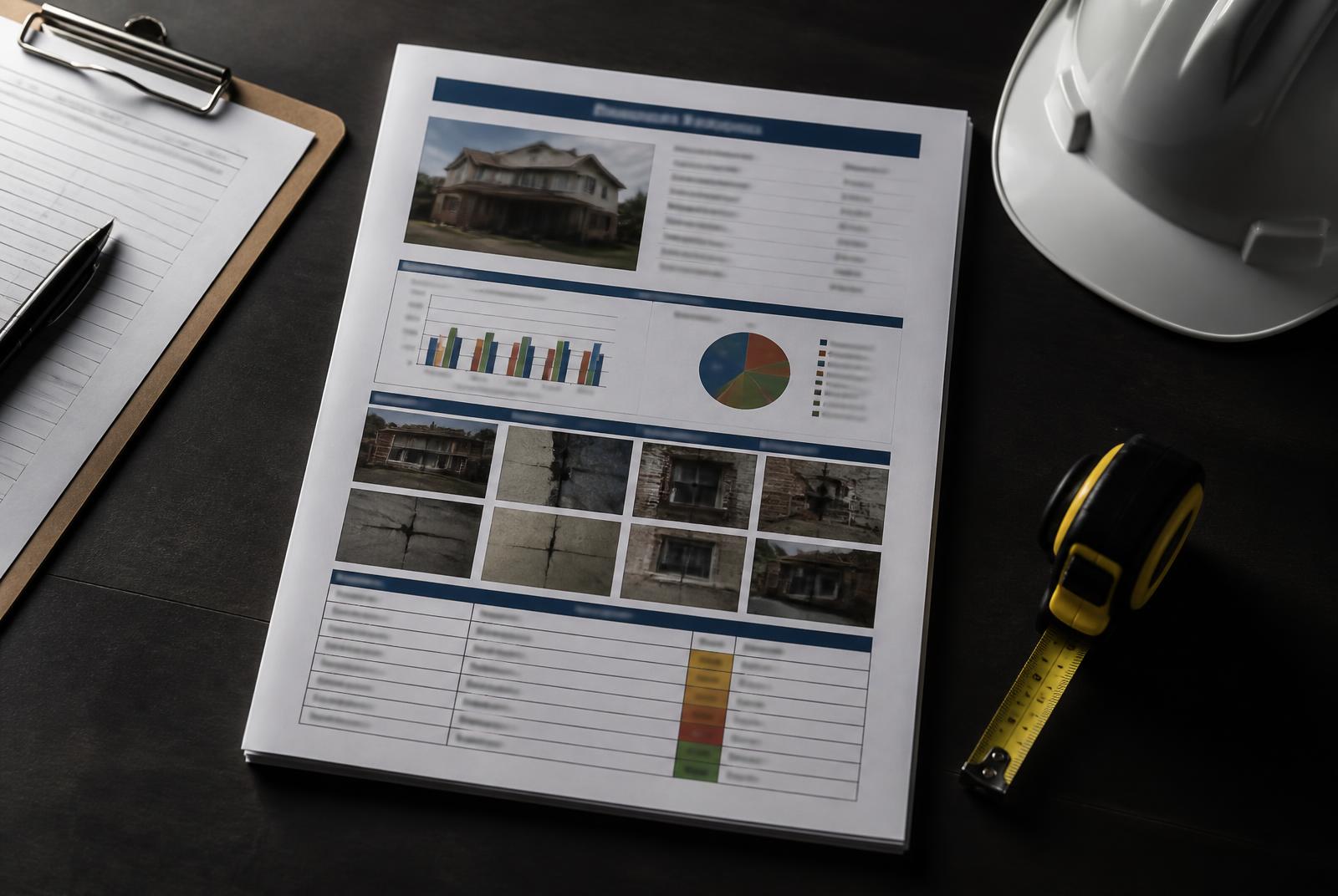
Scope & report
What is an immediate repair versus a capital reserve item?
An immediate repair is a deficiency that requires action now or within roughly twelve months, usually for safety, code, or to prevent accelerating damage. A capital reserve item is a system nearing the end of its useful life whose replacement is projected across the analysis period, typically ten or twelve years.
All FAQ / Scope & report
Quick answer
An immediate repair is a deficiency that requires action now or within roughly twelve months, usually for safety, code, or to prevent accelerating damage. A capital reserve item is a system nearing the end of its useful life whose replacement is projected across the analysis period, typically ten or twelve years.
— U.S. Commercial Building Inspections (USCBI), commercial property inspectors in San Diego, CA. Serving 5 Southern California counties.
Immediate repairs
Immediate repairs are conditions that should be corrected now. They generally fall into four buckets:
- Life safety - inoperable exit lighting, blocked egress, an expired fire sprinkler certification, exposed energized conductors.
- Code or regulatory - an open permit, an unpermitted alteration, a documented accessibility violation.
- Active deterioration - an ongoing roof leak, a failing retaining wall, water intrusion at a wall assembly.
- Failed equipment - a dead rooftop unit, a leaking water heater, a non-functioning dock leveler.
Lenders typically require immediate repairs to be escrowed at 100 to 125 percent of the estimated cost and completed within 60 to 180 days after closing. That escrow is real cash at closing, which is why the immediate table is the first thing an underwriter reads.
Capital reserve items
Reserve items are not defects. They are predictable expirations. A twelve-year-old rooftop unit with an expected useful life of eighteen years is functioning correctly today and belongs in year six of the reserve table, not the immediate list. The reserve table converts those expirations into an annual figure - often expressed as dollars per unit per year for multifamily or dollars per square foot for commercial - that the lender may require you to fund monthly.
| Condition | Classification |
|---|---|
| Active roof leak staining ceiling tile | Immediate |
| Roof in fair condition with 5 years remaining life | Reserve, year 5 |
| Missing GFCI protection at wet location | Immediate |
| Parking lot with alligator cracking, no failure | Reserve, seal and overlay |
| Expired sprinkler five-year certification | Immediate |
| Two of eight RTUs at 17 years old | Reserve, years 1-3 |
Why the split matters to your deal
The same $250,000 of findings produces very different outcomes depending on classification. Load into immediate repairs and it becomes a closing escrow and a retrade conversation. Load into reserves and it becomes an annual line in your operating model that affects yield but not closing cash. An honest report puts each item where the evidence puts it, and explains the reasoning so the classification survives scrutiny from the other side.
Using both tables after closing
The reserve table is a maintenance plan you already paid for. Hand it to your property manager, calendar the year-one and year-two items, and revisit it after any major replacement. Owners who do this stop having emergency capital events.
Reviewed by

Maurice Bedard
Chief Inspector & Owner · CCPI, CMI, CMR
Maurice Bedard is the chief inspector and owner of U.S. Commercial Building Inspections, a Certified Commercial Property Inspector with more than 25 years in commercial real estate, construction, restoration and remediation across Southern California. He has personally inspected office, retail, industrial, multifamily and institutional buildings for buyers, owners, brokers and lenders throughout San Diego, Orange, Los Angeles, Riverside and San Bernardino Counties.
Reviewed by Maurice Bedard · Updated August 22, 2026
More about our inspectors · Questions about your building? Call 619-473-2133.
Related questions
People also ask
What is ASTM E2018 and why does it matter?
ASTM E2018 is the consensus standard for baseline Property Condition Assessments of commercial real estate. It defines the walk-through survey, document review, interviews and the Property Condition Report, including opinions of probable cost, which is why lenders and institutional investors require reports written to it.
Can I use the inspection report to renegotiate the price?
Yes, and a properly documented Property Condition Assessment is the most effective tool for it, because opinions of probable cost turn observations into a number a seller can evaluate. Retrades succeed when they are specific, sourced and delivered inside the contingency period.
Does my lender require a Property Condition Assessment?
Almost always, yes. SBA 504 and 7(a), CMBS, life company, agency multifamily and most bank commercial loans require an ASTM E2018 Property Condition Assessment, and they use the immediate repair table to set a closing escrow and the capital reserve table to set your ongoing replacement reserve.
What is included in a commercial property inspection?
A commercial property inspection covers the roof, structural system, building envelope, HVAC, electrical, plumbing, fire and life safety systems, vertical transportation, interiors, site improvements and accessibility observations, and delivers findings as prioritized immediate repair and capital reserve tables.
Request a quote
Get this answered for your property
Send the address, asset type and approximate square footage. We reply with scope and fee, usually the same business day.
619-473-2133
Mon–Fri 7:00am–6:00pm