
Scope & report
What is ASTM E2018 and why does it matter?
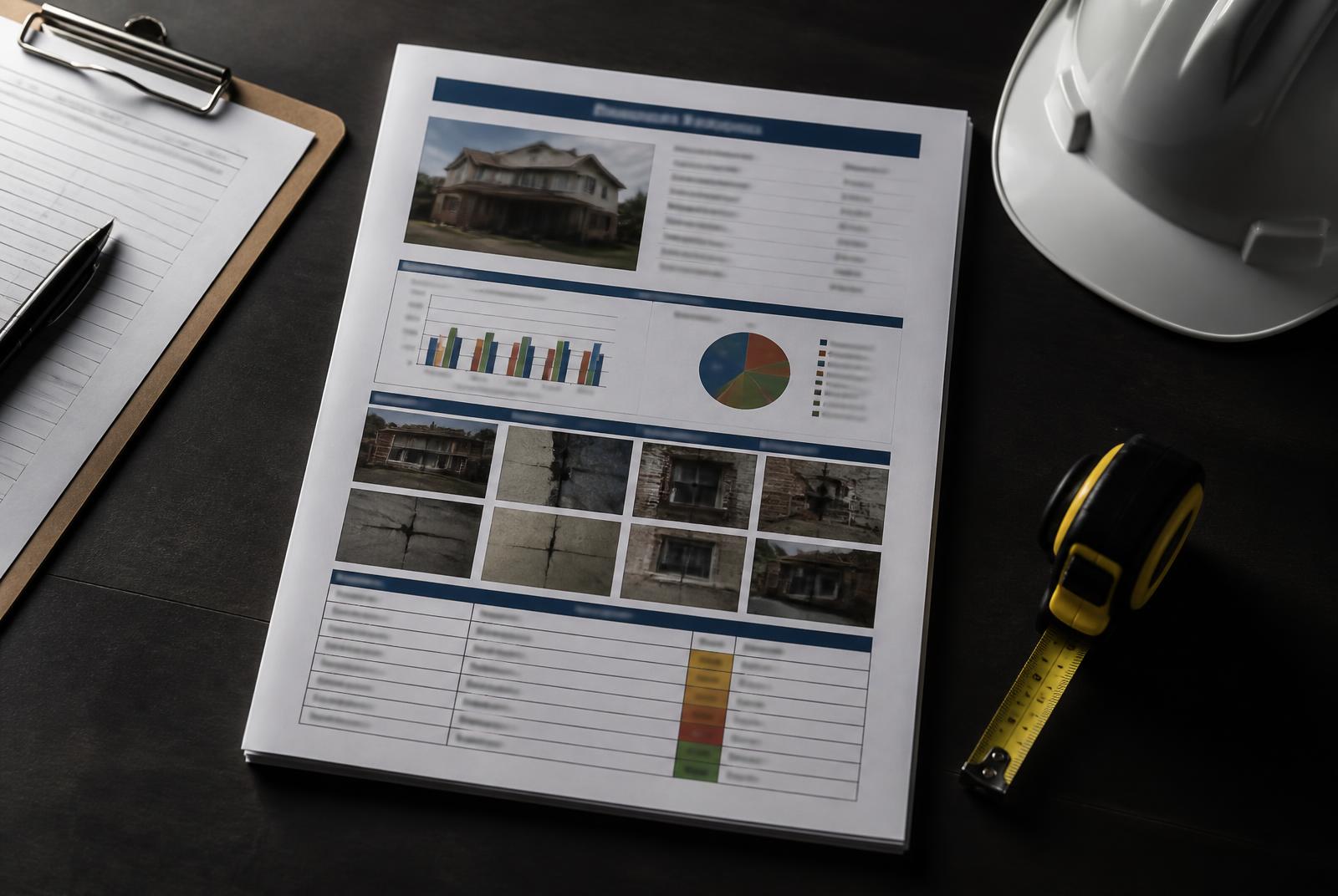
ASTM E2018 is the consensus standard for baseline Property Condition Assessments of commercial real estate. It defines the walk-through survey, document review, interviews and the Property Condition Report, including opinions of probable cost, which is why lenders and institutional investors require reports written to it.
All FAQ / Scope & report
Quick answer
ASTM E2018 is the consensus standard for baseline Property Condition Assessments of commercial real estate. It defines the walk-through survey, document review, interviews and the Property Condition Report, including opinions of probable cost, which is why lenders and institutional investors require reports written to it.
— U.S. Commercial Building Inspections (USCBI), commercial property inspectors in San Diego, CA. Serving 5 Southern California counties.
What the standard defines
ASTM E2018, Standard Guide for Property Condition Assessments: Baseline Property Condition Assessment Process, establishes what a commercial condition assessment must include for the result to be considered a baseline PCA. Its four pillars are:
- Walk-through survey of the property's systems and components by a qualified field observer.
- Document review and research - permits, certificates of occupancy, prior reports, maintenance and service records, warranties, code and violation records.
- Interviews with owners, property management, maintenance staff, occupants and, where relevant, municipal officials.
- Property Condition Report documenting physical deficiencies and providing opinions of probable cost to remedy them.
Baseline versus enhanced scope
E2018 is deliberately a baseline. It is not an exhaustive engineering study, it does not require destructive testing, and it does not require calculations for structural or seismic adequacy. Anything beyond baseline is "out of scope" work the user may add: infrared roof surveys, structural analysis, seismic evaluation to ASCE 41, accessibility surveys, energy audits, or Phase I environmental assessment, which is a separate standard entirely (ASTM E1527).
Why lenders require it
Because it makes reports comparable. An underwriter reading twenty deals a month needs immediate repairs and reserve requirements presented consistently. E2018's cost tables translate directly into loan conditions: a holdback for immediate repairs, and a per-unit or per-square-foot annual replacement reserve derived from the capital table. SBA, CMBS, life company and agency multifamily lenders all lean on this.
How to read the report's edges
The limitations section is the most under-read part of a PCA and the most important. It identifies which spaces were not accessed, which systems could not be operated, and which conclusions rest on records rather than observation. When a report says the sprinkler system was not tested or three suites were inaccessible, that is your prompt to decide whether to add scope, not a formality.
Practical takeaway
If a lender is involved, specify E2018 in the engagement and ask for the lender to be named as an intended user. If no lender is involved, E2018 is still the right framework, because it forces the cost discipline that makes the report useful in a negotiation.
Reviewed by

Maurice Bedard
Chief Inspector & Owner · CCPI, CMI, CMR
Maurice Bedard is the chief inspector and owner of U.S. Commercial Building Inspections, a Certified Commercial Property Inspector with more than 25 years in commercial real estate, construction, restoration and remediation across Southern California. He has personally inspected office, retail, industrial, multifamily and institutional buildings for buyers, owners, brokers and lenders throughout San Diego, Orange, Los Angeles, Riverside and San Bernardino Counties.
Reviewed by Maurice Bedard · Updated August 22, 2026
More about our inspectors · Questions about your building? Call 619-473-2133.
Related questions
People also ask
What is the difference between a PCA and a home inspection?
A Property Condition Assessment follows ASTM E2018, evaluates commercial systems under commercial standards, and delivers opinions of probable cost plus a multi-year capital reserve table. A home inspection follows a residential standard of practice and produces a defect checklist with no cost modeling and no lender acceptance.
Does my lender require a Property Condition Assessment?
Almost always, yes. SBA 504 and 7(a), CMBS, life company, agency multifamily and most bank commercial loans require an ASTM E2018 Property Condition Assessment, and they use the immediate repair table to set a closing escrow and the capital reserve table to set your ongoing replacement reserve.
What is an immediate repair versus a capital reserve item?
An immediate repair is a deficiency that requires action now or within roughly twelve months, usually for safety, code, or to prevent accelerating damage. A capital reserve item is a system nearing the end of its useful life whose replacement is projected across the analysis period, typically ten or twelve years.
What is included in a commercial property inspection?
A commercial property inspection covers the roof, structural system, building envelope, HVAC, electrical, plumbing, fire and life safety systems, vertical transportation, interiors, site improvements and accessibility observations, and delivers findings as prioritized immediate repair and capital reserve tables.
Request a quote
Get this answered for your property
Send the address, asset type and approximate square footage. We reply with scope and fee, usually the same business day.
619-473-2133
Mon–Fri 7:00am–6:00pm