
Roof & building systems
How do I know if a commercial roof needs replacement or just repair?
Repair when leaks are isolated, the membrane is otherwise sound and insulation is dry. Replace when moisture surveys show widespread saturated insulation, the membrane has lost integrity across the field, the deck is compromised, or you are past the system's service life with rising annual repair spend.
All FAQ / Roof & building systems
Quick answer
Repair when leaks are isolated, the membrane is otherwise sound and insulation is dry. Replace when moisture surveys show widespread saturated insulation, the membrane has lost integrity across the field, the deck is compromised, or you are past the system's service life with rising annual repair spend.
— U.S. Commercial Building Inspections (USCBI), commercial property inspectors in San Diego, CA. Serving 5 Southern California counties.
The decision framework
| Evidence | Repair | Recover | Replace |
|---|---|---|---|
| Wet insulation area (moisture survey) | Under ~10% | 10 - 25% (remove wet areas) | Over ~25% |
| Membrane condition | Sound, isolated defects | Weathered but stable substrate | Brittle, shrinking, widespread open seams, granule loss to felt |
| Leak pattern | One or two locations | Multiple but localized | Chronic, moving, multiple planes |
| Age vs service life | Well inside expected life | Near end of life | Past expected life |
| Existing roof layers | Any | One layer only (code limit) | Two or more layers present |
| Deck condition | Sound | Sound | Corroded, delaminated or deteriorated |
Typical service lives
Expected service life gives you the frame, and condition gives you the answer. Built-up and modified bitumen commonly run 15-25 years, TPO and PVC 15-25 years depending on thickness and detailing, EPDM 20-30 years, spray polyurethane foam 15-20 years with recoating, standing seam metal 30-45 years, and concrete or clay tile 40-plus years with underlayment replacement in between. A 22-year-old BUR with three patched generations is a replacement conversation; a 9-year-old TPO with two bad penetrations is a repair.
Get the moisture data before deciding
Visual inspection cannot tell you how much insulation is wet. Infrared thermography, capacitance or nuclear surveys can, typically for $0.03-$0.10 per square foot. That data is what separates a defensible $60,000 partial repair from an avoidable $500,000 full tear-off, and vice versa - it just as often proves that a roof the owner hoped to patch is saturated across a third of its area.
The repair-spend test
Compare annual repair spend to replacement cost. Once you are spending 3-5 percent of replacement cost per year on recurring leak repairs, you are financing a new roof without getting one. Add the cost of tenant disruption, damaged inventory and interior finish repair, which owners consistently exclude from the comparison.
Recover versus tear-off
A recover installs a new membrane over the existing system and is cheaper and faster, but code generally limits a roof to two total layers, wet insulation must still be removed, and the existing deck and attachment must be adequate. If a roof already has two layers, or if the survey shows widespread saturation, tear-off is the only compliant path.
What we deliver
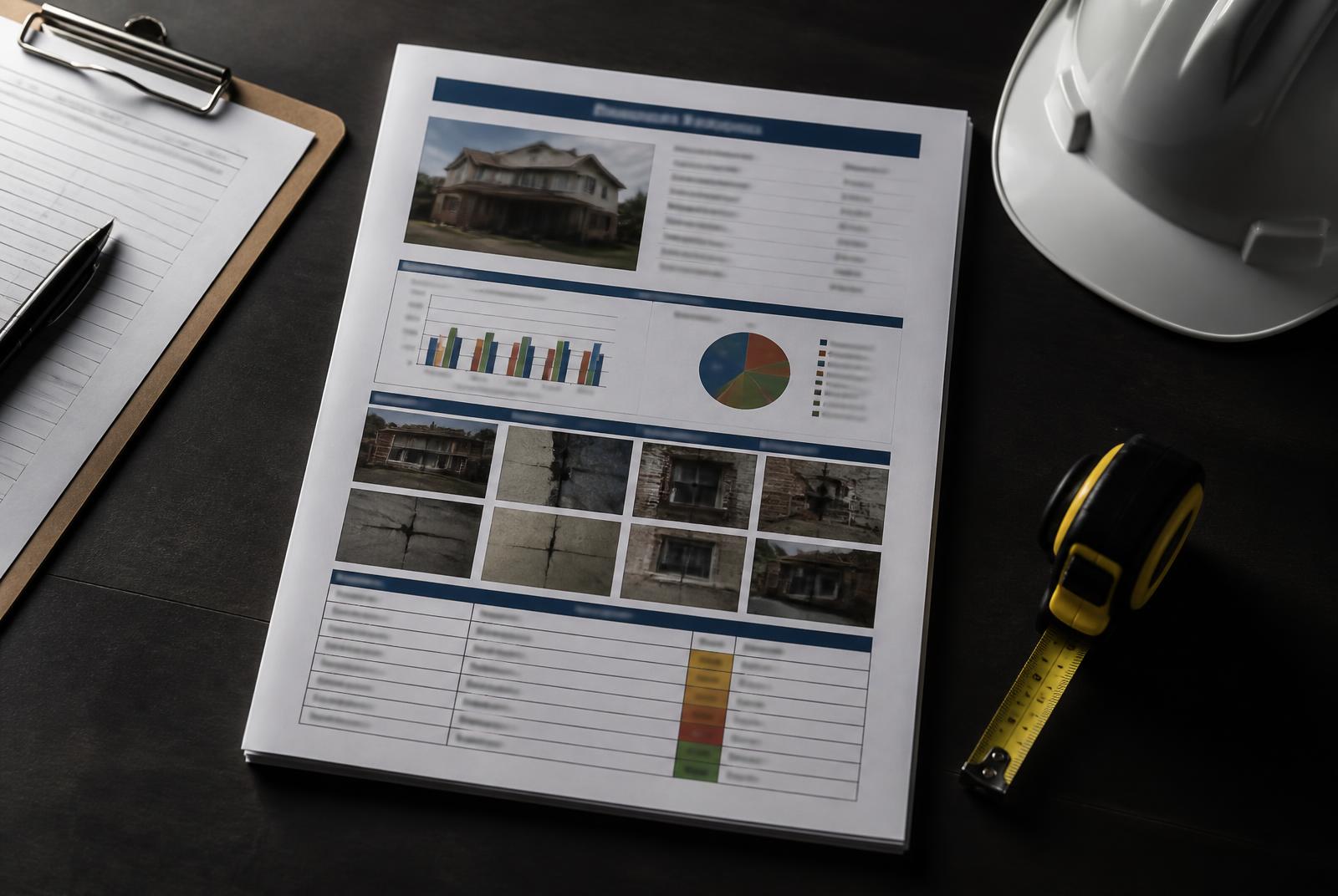
Our roof reports give you membrane and detail condition with captioned photographs, drainage and ponding evidence, penetration condition, an estimated remaining service life, and a replacement cost range placed in the capital reserve table - so the repair-or-replace decision is made against numbers rather than impressions.
Reviewed by

Maurice Bedard
Chief Inspector & Owner · CCPI, CMI, CMR
Maurice Bedard is the chief inspector and owner of U.S. Commercial Building Inspections, a Certified Commercial Property Inspector with more than 25 years in commercial real estate, construction, restoration and remediation across Southern California. He has personally inspected office, retail, industrial, multifamily and institutional buildings for buyers, owners, brokers and lenders throughout San Diego, Orange, Los Angeles, Riverside and San Bernardino Counties.
Reviewed by Maurice Bedard · Updated August 22, 2026
More about our inspectors · Questions about your building? Call 619-473-2133.
Related questions
People also ask
How often should a commercial roof be inspected?
Twice a year - once before the fall rain season and once in spring - plus after any major storm, rooftop equipment work, or hail. Most manufacturer warranties also require documented periodic inspection and maintenance, and neglecting it is a common reason warranty claims are denied.
How much does a commercial roof inspection cost?
A standalone commercial roof inspection generally costs $400-$1,800 depending on roof area, roof type and access. Infrared or capacitance moisture surveys add $0.03-$0.10 per square foot, and a roof evaluation is included at no extra charge inside a full Property Condition Assessment.
What is an immediate repair versus a capital reserve item?
An immediate repair is a deficiency that requires action now or within roughly twelve months, usually for safety, code, or to prevent accelerating damage. A capital reserve item is a system nearing the end of its useful life whose replacement is projected across the analysis period, typically ten or twelve years.
Do you inspect the roof, HVAC and electrical yourself?
Yes. Our inspectors access the roof, open electrical panels where safe, and inspect mechanical equipment directly rather than relying on contractor summaries. We bring in licensed specialty consultants only when a finding requires engineering analysis, certification or testing beyond a baseline assessment.
Request a quote
Get this answered for your property
Send the address, asset type and approximate square footage. We reply with scope and fee, usually the same business day.
619-473-2133
Mon–Fri 7:00am–6:00pm