
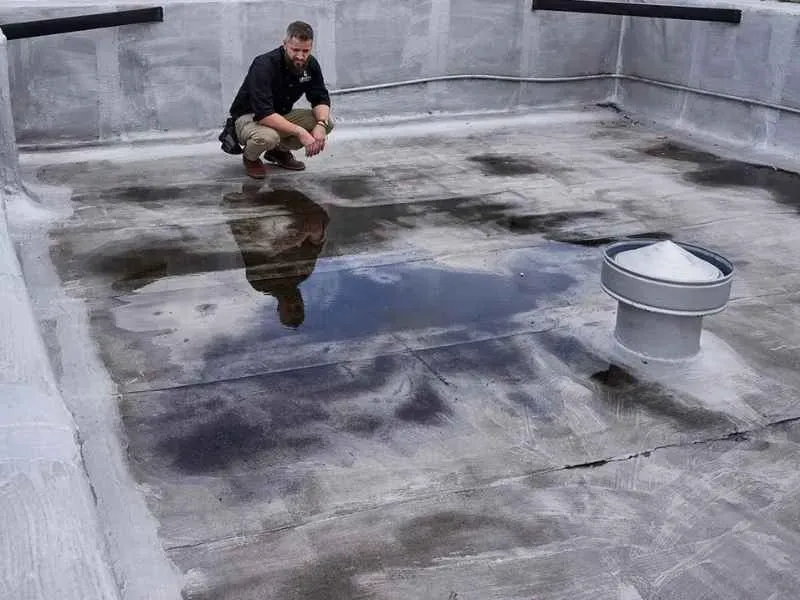
El Niño roof prep
Roof Thermal Imaging and Moisture Mapping Inspections in San Diego, CA
Infrared roof scans and scaled moisture maps that find wet insulation before the forecast very strong 2026–27 El Niño winter.
Quick answer: A roof thermal imaging and moisture mapping inspection uses an infrared camera, flown by drone or carried across the roof after sunset, to find wet insulation trapped inside a commercial roof. Suspect areas are confirmed with moisture meters and optional core cuts, then drawn onto a roof plan with square footage, so you repair only the wet sections before the rains arrive. U.S. Commercial Building Inspections (USCBI) performs these inspections across San Diego County and Southern California, with reports typically in 1–3 business days.
Why winter 2026–2027 matters: a very strong El Niño is forecast
On September 10, 2026, the NOAA Climate Prediction Center kept its El Niño Advisory in place and said El Niño is strengthening, with a greater than 90% chance of a very strong event during fall and winter 2026–27 (NOAA CPC ENSO Diagnostic Discussion). NOAA also gives a 75% chance that the October–December 2026 event will be the strongest on record since 1950. NOAA is careful to note that a strong El Niño raises the chances of El Niño–type impacts but never guarantees them (NOAA CPC ENSO strength probabilities).
For Southern California, strong El Niño winters have historically been associated with a higher chance of above-average rain. The 1982–83, 1997–98 and 2015–16 events are the benchmark strong El Niños that owners and roofers remember. Even without El Niño, the January 22, 2024 storm showed how quickly heavy rain can overwhelm San Diego drains, roofs and buildings. A roof holding wet insulation going into a wet winter is a roof that will leak, sag, grow mold and lose its warranty value faster.
Prepare-now timeline
- September–October: Schedule the infrared scan while roofs are dry and evenings are clear — the conditions thermal imaging needs.
- October–November: Use the moisture map to bid targeted repairs: replace wet insulation, reseal flashings, clear drains and scuppers.
- November–December: Complete repairs and keep the dated report as your pre-storm condition record for insurance, lenders and tenants.
- After each major storm: A follow-up visual or drone check confirms repairs held.
Past Southern California storms that hit commercial roofs
History shows what a wet winter does to flat roofs with trapped moisture. These are the storms owners and property managers in our region still talk about:
- 1982–83 El Niño: One of the strongest El Niños on record brought repeated winter storms, high surf and coastal flooding across Southern California.
- 1997–98 El Niño: A very strong El Niño delivered well above-normal rainfall to San Diego and Los Angeles, with February 1998 storms causing widespread flooding, roof leaks and mudslides.
- January 2005 and December 2010: Back-to-back storm series soaked the region, overwhelming roof drains and scuppers on older low-slope buildings.
- 2015–16 El Niño: A strong El Niño with January 2016 storm systems that exposed failing roof membranes and clogged drains across the county.
- Winter 2022–23: A series of atmospheric rivers brought one of the wettest winters in years to California, with widespread roof and water-intrusion claims.
- January 22, 2024 – San Diego: The National Weather Service recorded about 2.73 inches of rain at San Diego Lindbergh Field, one of the wettest days on record there, flooding homes, businesses and roads in southeast San Diego, National City and beyond (NWS San Diego).
- February 4–6, 2024 – Los Angeles: A slow-moving atmospheric river dropped many inches of rain on Los Angeles County, one of the wettest two-day periods in downtown Los Angeles history.
Every one of these events found the same weak spots: wet insulation, open seams, failed flashings and blocked drains. An infrared moisture map finds those areas before the next storm does.
How thermal imaging finds trapped roof moisture
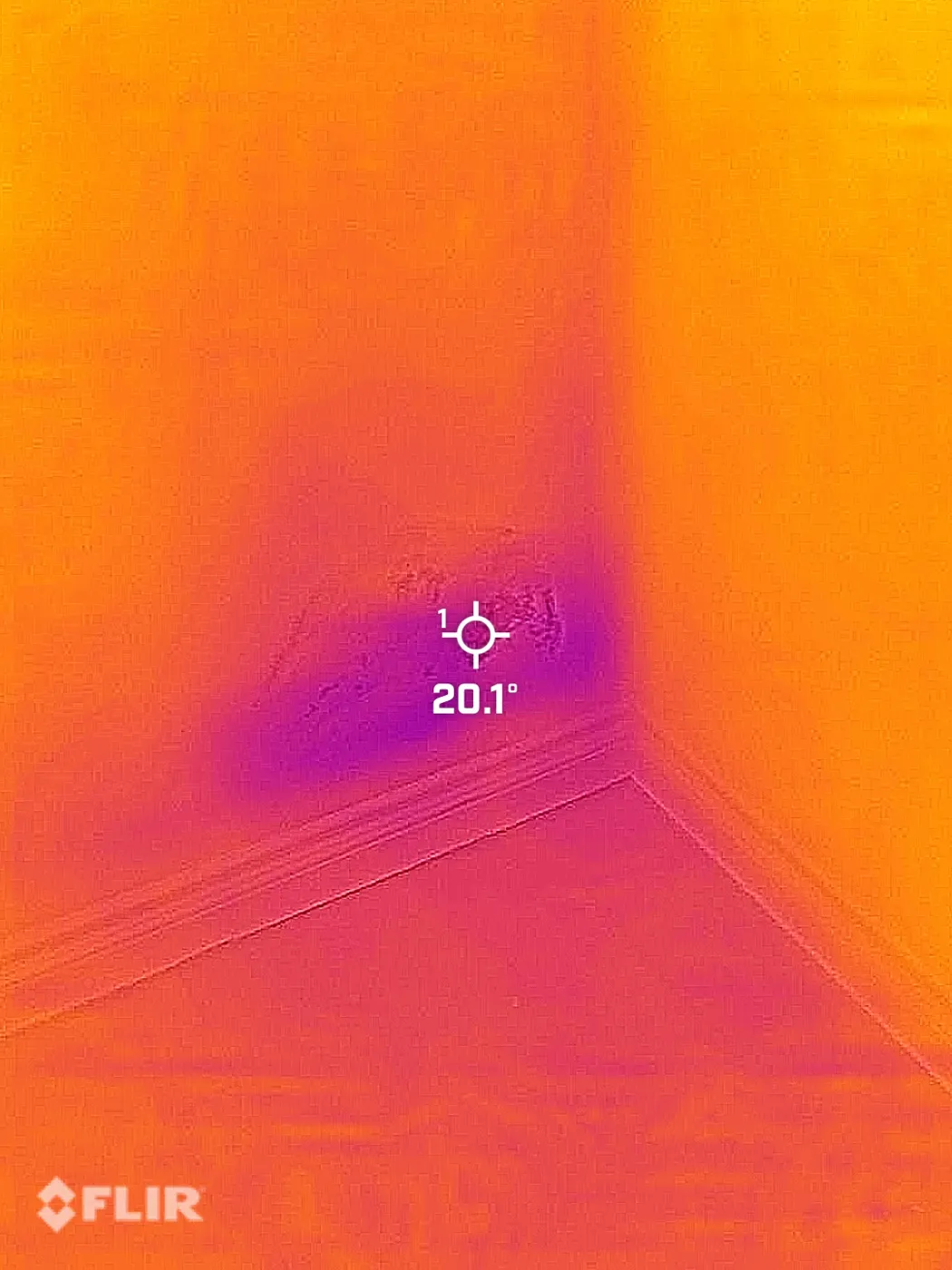
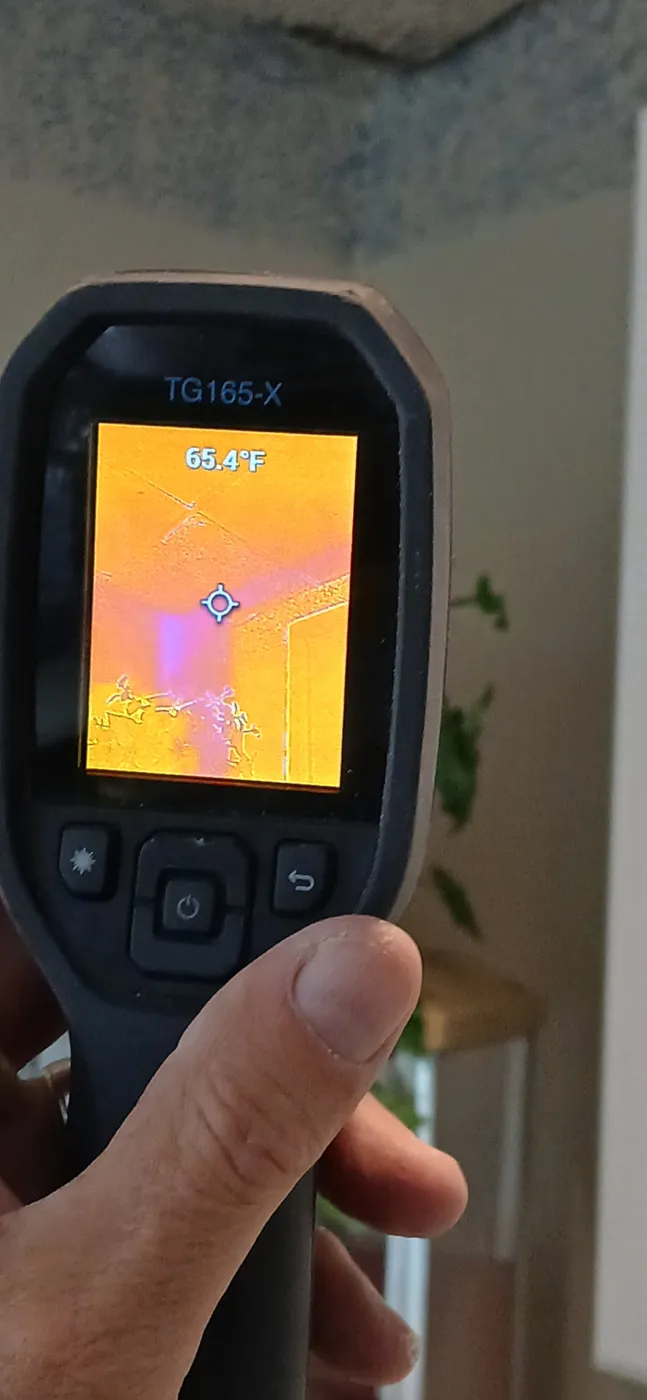
Wet insulation holds heat longer than dry insulation. After a sunny day, the roof absorbs heat; after sunset, dry areas cool quickly while saturated areas stay warm and show as bright anomalies on the infrared image. We scan in the evening window, on a dry roof, with light wind and no recent rain, following the approach described in ASTM C1153 for infrared roof moisture surveys.
Drone or on foot? Large warehouse and industrial roofs, and roofs that cannot be walked safely, are scanned by FAA Part 107 drone for fast, complete coverage. Smaller or complex roofs are scanned on foot with a handheld camera. Many projects combine both.
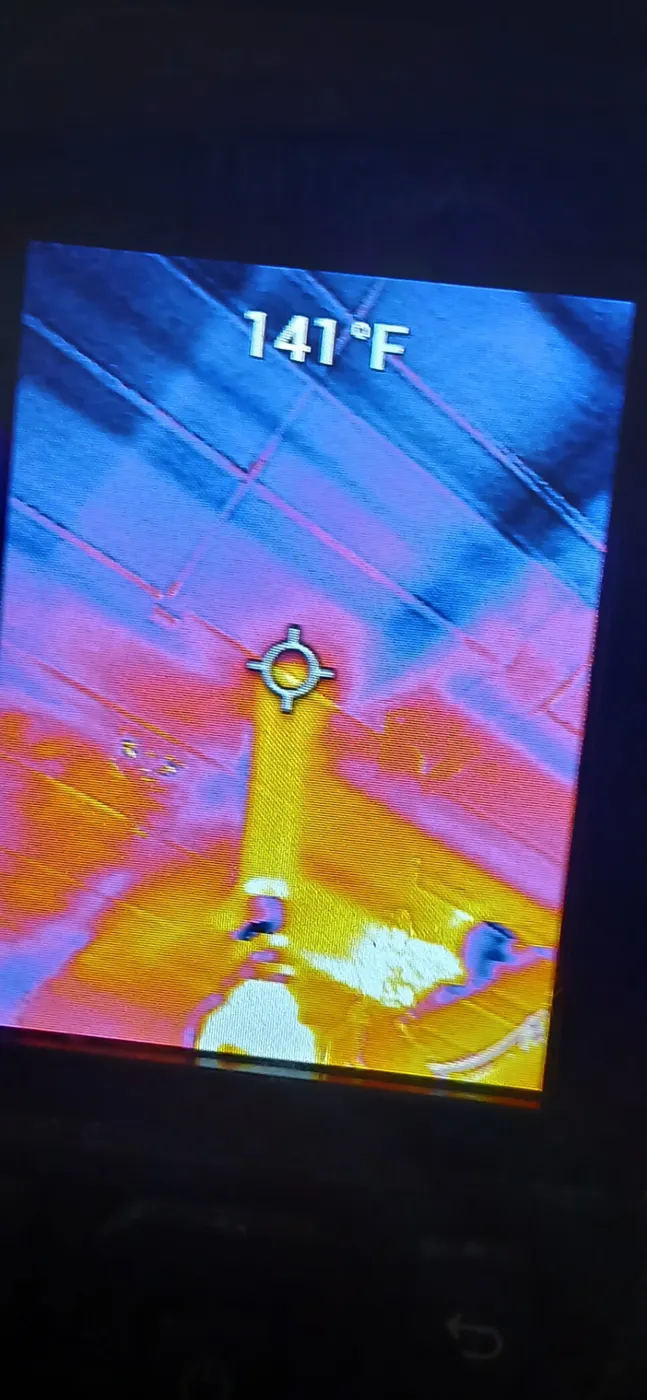
Our moisture mapping process
- Infrared survey: Full-roof thermal scan by drone and/or handheld camera.
- Marking: Anomalies are outlined on the roof and photographed.
- Verification: Moisture meter readings confirm wet versus dry areas and rule out false positives such as extra surfacing or equipment heat.
- Core cuts (optional, with owner approval): Small samples confirm insulation type and saturation; cuts are patched the same day.
- Moisture map: Wet areas are drawn onto a scaled roof plan with square footage.
What you receive
- A scaled moisture map showing every wet area and its estimated square footage.
- Paired thermal and daylight photos of each anomaly.
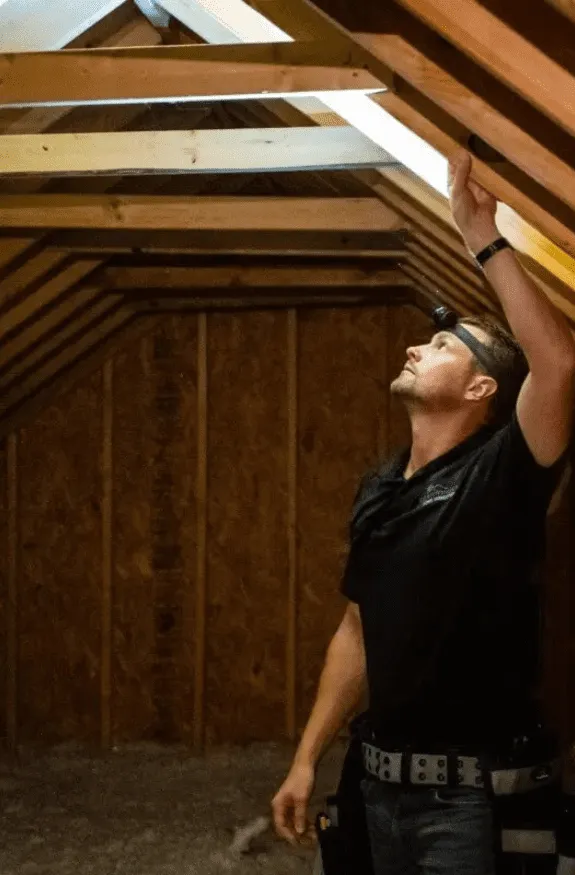
- Roof condition notes: membrane, seams, flashings, drains, scuppers, penetrations and rooftop equipment.
- A prioritized repair-versus-replace list, so contractors bid the right scope.
- A dated record suitable for insurance, lender, tenant and warranty files.
Roof types we scan — and the limits
Infrared moisture surveys work best on built-up (BUR), modified bitumen, TPO, PVC, EPDM and coated low-slope roofs with absorbent insulation. They are less reliable on heavily ballasted roofs, roofs with closed-cell insulation that does not absorb water, metal roofs without insulation beneath, and any roof scanned right after rain or in strong wind. When infrared is not the right tool, we tell you and recommend a visual, drone or moisture-meter grid survey instead.
Who this is for
- Owners and property managers preparing roofs before the El Niño season.
- HOAs and associations planning reserves and repairs.
- Buyers and lenders adding roof moisture data to due diligence and property condition assessments.
- Owners documenting pre-storm condition for insurance.
- Owners checking warranty-period roofs or planning recover versus tear-off.
Counties we cover
- San Diego County: Coastal and inland business parks, many with aging flat roofs and undersized drains.
- Orange County: Large low-slope office and industrial roofs in Irvine, Anaheim and Santa Ana.
- Los Angeles County: Dense warehouse and multifamily stock where one wet roof affects many tenants.
- Riverside County: Big-box logistics roofs where drone scanning keeps large surveys efficient.
- San Bernardino County: Inland Empire distribution centers and foothill properties exposed to intense storms.
Pricing
Roof thermal imaging and moisture mapping inspections typically start at about $500 to $1,500, depending on size and scope. Final pricing depends on:
- Total roof square footage
- Number of buildings and roof levels
- Drone versus on-foot scanning and roof access
- Whether moisture meter grids or core cuts are needed
- Travel distance and report deadline
Multi-building portfolios, HOAs and large distribution roofs are quoted per project. Call 619-473-2133 or request a quote with the address, number of buildings and approximate roof square footage.
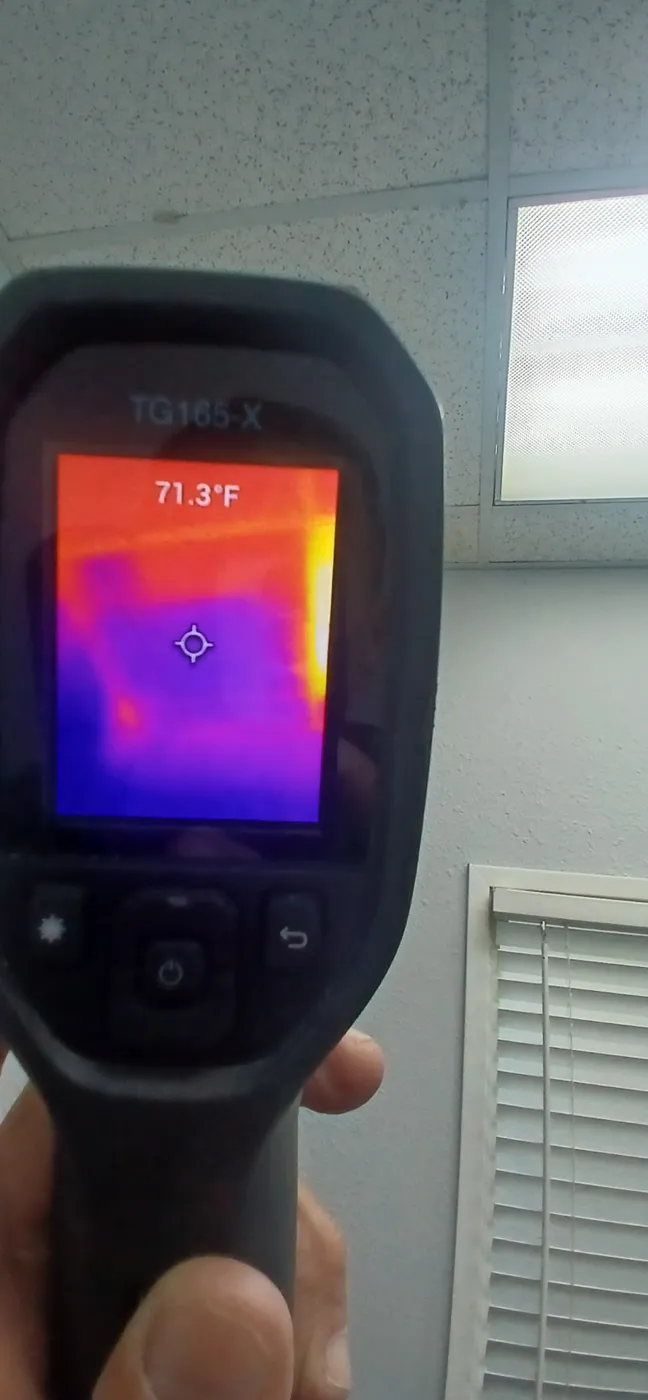
Photos from our thermal roof and moisture inspections
Related services
See our commercial roof inspections, infrared thermal imaging, drone inspections, commercial mold inspections and capital needs assessments.
Frequently asked questions
How much does a roof thermal imaging inspection cost?
Most roof thermal imaging and moisture mapping inspections start at about $500 to $1,500, depending on roof size, number of buildings, square footage and scope.
Is El Niño forecast for the 2026–2027 winter?
Yes. As of September 10, 2026, NOAA's Climate Prediction Center has an El Niño Advisory in effect and gives a greater than 90% chance of a very strong El Niño during fall and winter 2026–27. Impacts, including heavier Southern California rain, are more likely but not guaranteed.
When is the best time to scan a roof before El Niño?
September through November, on dry evenings after sunny days. That leaves time to repair wet areas before the heaviest rains, which usually arrive from December to March.
Can thermal imaging find a roof leak?
It finds wet insulation, which is where leaks spread and do damage. The entry point is then traced from the wet area to nearby flashings, seams, drains or penetrations.
Can you scan a roof right after it rains?
No. Surface water hides the thermal pattern. We need the roof surface dry, usually at least a day or two after rain.
Do you use drones for roof thermal imaging?
Yes. We fly FAA Part 107 drones for large or unsafe roofs and use handheld cameras on foot for smaller or complex roofs.
How accurate is infrared moisture mapping?
Infrared shows where moisture is likely. We confirm each area with moisture meters and, if approved, core cuts before it goes on the map.
Will the report help with insurance?
A dated report with photos and a moisture map documents the roof's condition before storms. Coverage decisions belong to your carrier and policy.
How fast will I get the report?
Typically 1–3 business days after the scan, with rush delivery available.
Related
Other commercial inspection services

Property Condition Assessment
Lender-ready PCA reports for acquisitions, refinancing and portfolio reviews, with immediate repair and capital reserve tables.
View scope
Phase 1 Environmental Site Assessment
Environmental site assessments that surface recognized environmental conditions before liability transfers to you.
View scope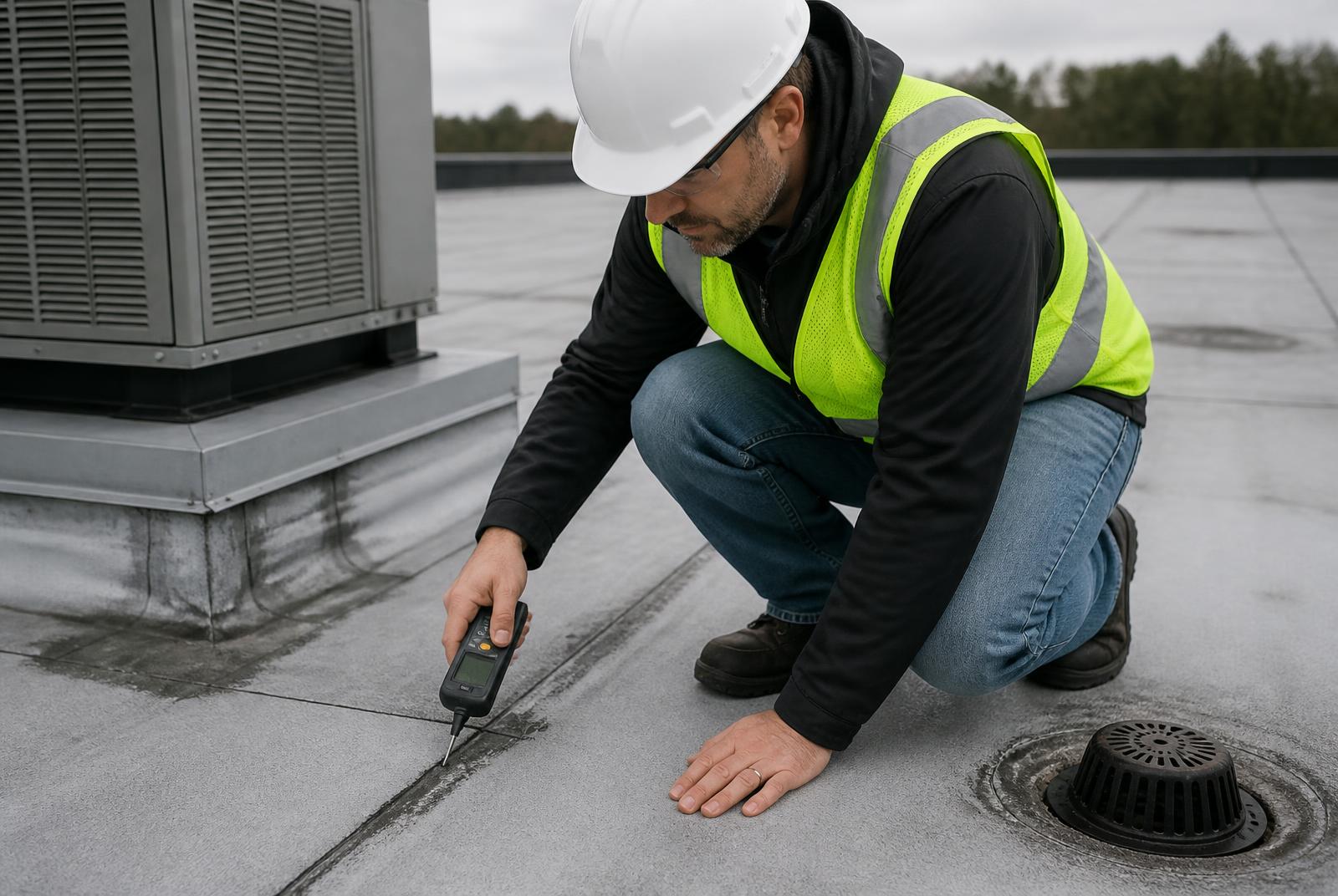
Roof Inspections
Membrane, flashing, drainage and penetration evaluation with moisture readings and remaining-life estimates.
View scopeRequest a quote
Request a roof thermal imaging and moisture mapping inspections quote
Send the address, asset type and approximate square footage. We reply with scope and fee, usually the same business day.
619-473-2133
Mon–Fri 7:00am–6:00pm