
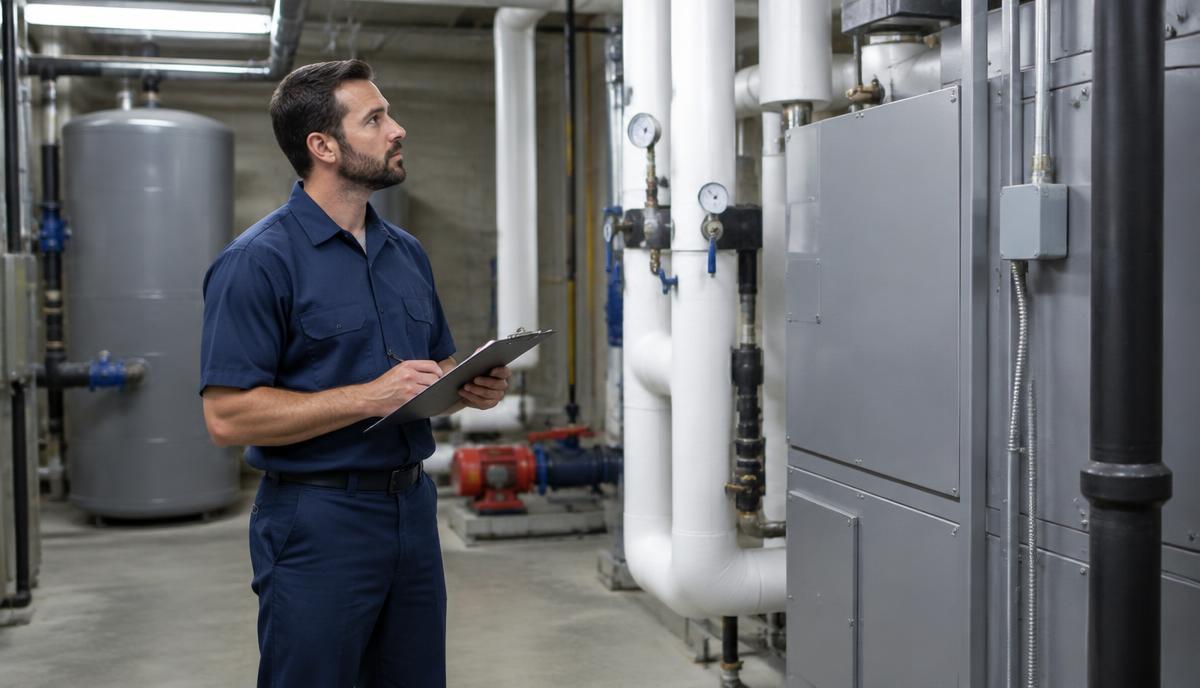
Build a checklist around your actual property
A useful commercial preventive maintenance checklist starts with what your building contains, not a generic calendar. An office in Mission Valley, a retail center in Carlsbad and a warehouse in Otay Mesa have different equipment, access restrictions and consequences when something fails. Walk the property with existing service records and tenant contacts before assigning recurring tasks.
Create an asset register that identifies each major system, its location, service history and responsible party. Review leases before assuming the landlord maintains equipment inside a tenant suite. Separate routine observations from work that requires qualified trades, specialized access or shutdown planning. The checklist should tell staff what to notice and whom to notify, not encourage them to open energized equipment.
- Record roof areas, HVAC unit identifiers, shutoffs and drainage routes.
- Name the person responsible for reviewing and closing each work order.
Make monthly walkthroughs consistent
Use the same route each month so changes are easier to spot. Start outside with entrances, parking areas, landscape drainage and accessible paths, then inspect common areas, restrooms and accessible service spaces. Photograph developing problems from repeatable viewpoints. A stain that looks unchanged in memory may be growing when compared with last month’s image.
Include tenant feedback in the inspection record. Repeated comfort complaints, intermittent odors or doors that stick can reveal problems that are absent during a short visit. Assign a priority, owner and next action to every finding rather than saving a folder of photographs without decisions.
- Check visible plumbing leaks, loose hardware and damaged walking surfaces.
- Observe lighting outages, blocked access and unusual equipment noise.
- Check ceilings for staining and verify previously reported repairs remain sound.
Tip: Key takeaway: A walkthrough becomes preventive maintenance only when its findings turn into assigned, tracked actions.
Schedule HVAC work around exposure and use
Follow equipment manufacturer instructions and qualified technician recommendations for filters, coils, belts, drains and controls. Filter condition depends on occupancy, outdoor dust and operating hours; a calendar reminder is a starting point, not proof that the interval suits the building. Keep unit identifiers consistent between roof labels, invoices and tenant service requests.
Coastal properties in Oceanside and Encinitas need attention to salt exposure and corrosion. Inland sites in Escondido, Santee and El Cajon can face heavier summer cooling demand. Plan cooling assessments before sustained heat rather than waiting for the first uncomfortable afternoon. Have technicians document findings, recommended work and anything deferred so equipment condition remains visible across service visits.
Prepare roofs and drainage before winter rain
San Diego County commonly receives its main seasonal rains from November through March. Arrange roof and drainage inspections before that period, allowing time for approved repairs. Long dry stretches can hide deteriorated flashings, accumulated debris and disconnected downspouts until runoff exposes them. A roof that has not leaked recently still needs a condition review.
Use qualified personnel with appropriate roof access and fall protection. Review primary drains, secondary overflow outlets, gutters, scuppers and discharge points as a connected system. Do not assume that a clean-looking drain means the downstream pipe is clear. After storms, inspect accessible interior areas for new staining and arrange a safe roof review when conditions permit.
- Record ponding evidence, damaged flashing and debris sources.
- Keep drainage discharge away from entrances and sensitive storage areas.
Tip: Key takeaway: Complete drainage checks before the November–March rains, then use storm observations to verify performance.
Keep doors, plumbing and life-safety obligations visible
Everyday building components deserve a defined inspection route. Loose door hardware can affect security and access, while a slow plumbing leak can damage cabinetry or adjacent finishes without creating an obvious emergency. Check visible conditions and route adjustments or repairs to the appropriate qualified provider. Do not modify fire-rated assemblies or accessibility features casually.
Maintain a separate compliance calendar for required inspections and testing, using applicable requirements, system documentation and advice from qualified specialists. A general maintenance checklist does not replace fire protection inspections, elevator service or other mandated work. Keep current reports available and track corrective items through completion, particularly where several vendors share responsibility for the same common area.
Turn observations into a workable annual calendar
Group tasks by season, access needs and consequences of failure. Spring is a useful planning window for cooling service; late summer and early fall offer an opportunity to prepare roofs and exterior drainage. During winter, prioritize safe storm observations and follow-up. Actual schedules should reflect equipment guidance, property conditions and inspection findings rather than season alone.
Coordinate disruptive work with tenants before appointments are confirmed. Medical offices, restaurants and distribution users may have very different acceptable shutdown windows. Record access instructions, escort requirements and approval contacts alongside each task. Review overdue items regularly, distinguishing an administrative delay from a growing operational risk.
- Reserve access and communicate potential noise, odors or service interruptions.
- Move repeated repair items into a replacement-planning discussion.
- Revisit task frequency when occupancy, use or equipment condition changes.
Use records to check quality and plan spending
A completed work order should describe the problem, work performed and remaining recommendations. Photographs are helpful, but acceptance also requires checking that the repair addressed the original symptom. A ceiling patch is not closure if the leak source remains unresolved. Ask who verified operation and whether a return visit is required.
Review recurring failures and deferred work when preparing the next budget. Separate routine maintenance, corrective repairs and capital replacements so the owner can see where money is going. Compare current condition with previous inspections rather than relying only on the number of tickets closed. This approach makes maintenance conversations more specific and helps identify work that deserves earlier funding.
Tip: Key takeaway: Judge maintenance by verified condition and resolved causes, not simply by completed visits.
How USCBI helps keep the checklist moving
U.S. Commercial Building Inspections and Maintenance supports commercial-only properties across San Diego County as one local partner for repair and maintenance coordination. Each client has a dedicated Service Manager and Service Coordinator, giving property teams clear contacts for scope decisions, scheduling and follow-through. Routine inspections and quality control help connect reported issues with completed work.
USCBI also provides 24/7/365 emergency response when an urgent building problem interrupts the planned schedule. A preventive program cannot eliminate every failure, but it can make access information, priorities and next steps clearer when one occurs. Request a walkthrough to review your property’s equipment, recurring problems and seasonal needs, then discuss a maintenance checklist that fits the building rather than a generic package.
Frequently asked questions
How often should we review our preventive maintenance checklist?
Review it when equipment, occupancy or building use changes, and revisit priorities during budget planning. Task frequency should follow equipment guidance, site conditions and qualified recommendations. A coastal building with recurring corrosion may need different checks from an inland warehouse with heavy cooling demand. Use inspection findings to adjust the schedule rather than repeating an unsuitable interval.
Can onsite staff complete every checklist item?
No. Onsite teams can report visible damage, tenant concerns and accessible operating conditions, but electrical work, roof access and specialized system service need appropriately qualified personnel. Define those boundaries in the checklist. Staff should know how to report a hazard and restrict access without attempting repairs that expose them or occupants to additional risk.
Does preventive maintenance replace required inspections?
No. Routine maintenance and legally required inspections serve related but different purposes. Maintain a separate schedule for applicable fire protection, elevator and other required testing, and confirm requirements with qualified providers or the relevant authority. Keep inspection reports and track corrective work. A completed general walkthrough is not evidence that a regulated system has passed inspection.
What should we bring to a USCBI walkthrough?
Bring available equipment lists, recent service reports, recurring tenant complaints, roof records and any maintenance responsibilities defined in leases. Identify access restrictions and upcoming occupancy changes. USCBI can use that context to discuss priorities, coordination and a practical scope. Missing records are also useful to flag because establishing a reliable baseline may be an early task.
About the author

Maurice Bedard
Chief Inspector & Owner · CCPI, CMI, CMR
Maurice Bedard is the chief inspector and owner of U.S. Commercial Building Inspections and Maintenance, a Certified Commercial Property Inspector with more than 25 years in commercial real estate, construction, restoration and remediation across Southern California. He has personally inspected office, retail, industrial, multifamily and institutional buildings for buyers, owners, brokers and lenders throughout San Diego, Orange, Los Angeles, Riverside and San Bernardino Counties.
Written and reviewed by Maurice Bedard
More about our inspectors · Questions about your building? Call 619-473-2133.