
Make the decision from evidence, not one leak
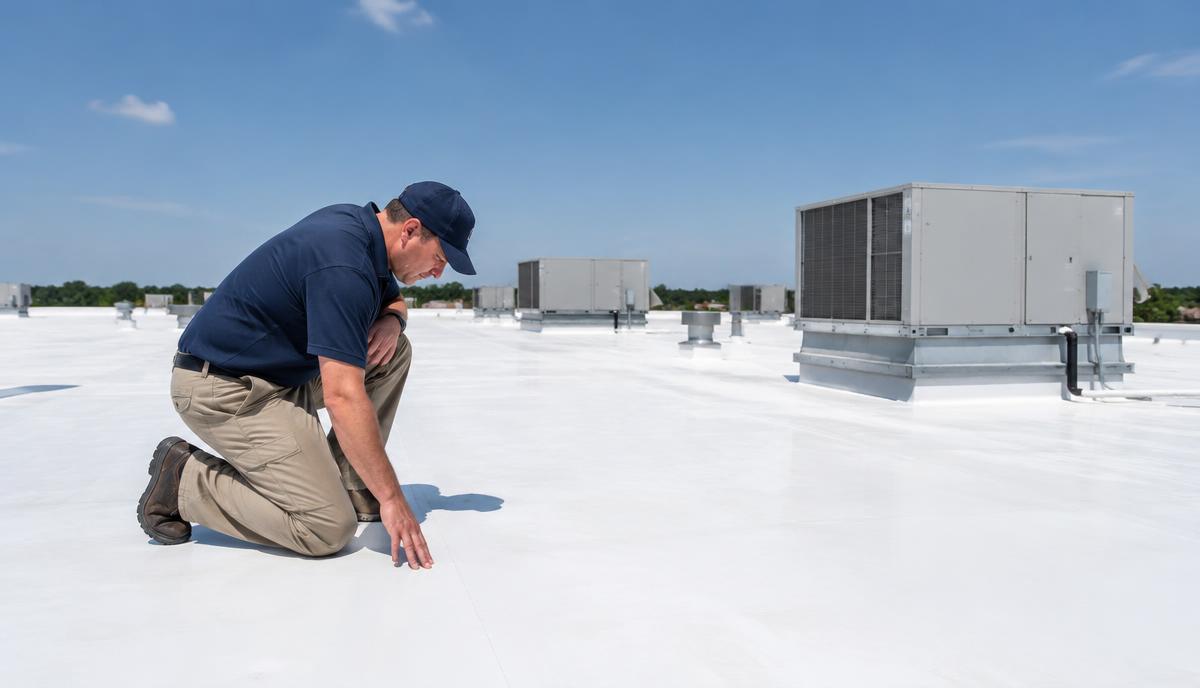
A commercial roof leak does not automatically mean replacement, and a successful patch does not establish that the entire roof is healthy. Start with a qualified inspection that considers the membrane, flashings, drainage, insulation and underlying assembly where assessment is warranted. Connect interior leak reports to roof findings instead of assuming the source sits directly above the stain.
For an office in Poway or an industrial building in Vista, the right decision also depends on how the building operates. Sensitive contents, limited shutdown windows and future ownership plans can affect project priorities. Ask for a condition-based explanation of repair, restoration and replacement options rather than a recommendation based only on age or the appearance of one damaged area.
Establish the roof system and repair history
Gather available drawings, warranty documents, service records and prior leak reports. Identify the existing system and known layers before choosing materials or discussing a recover. Product compatibility matters: a material that adheres to one roof surface may be unsuitable for another. Unverified patching can complicate later repairs and may affect applicable warranty conditions.
Ask the inspector to document observed defects and uncertainty. If moisture is suspected within the assembly, additional investigation may be appropriate. Methods such as moisture surveys or controlled openings have limitations and should be selected and interpreted by qualified professionals. Obtain authorization for invasive work and arrange proper closure. A report should distinguish confirmed findings from areas requiring further assessment.
- Map recurring leak locations and previous repairs.
- Identify drainage trouble and evidence of persistent ponding.
- Record access limitations and roof-mounted equipment interfaces.
When targeted repair is a reasonable option
Repair may be appropriate when defects are localized and the surrounding assembly remains serviceable. Examples include a damaged flashing detail, a discrete puncture or a failed connection at a penetration. The important question is whether the proposed work addresses the cause without leaving broader deterioration or wet materials unexamined.
Request a defined repair scope with compatible materials, preparation requirements and a verification plan. Ask what the inspection suggests about the remaining roof and what it cannot establish. A targeted repair can be a sound operational choice, including while a larger project is planned, but that does not make it a permanent solution for widespread failure. Keep temporary protection clearly distinguished from completed corrective work.
Tip: Key takeaway: Choose targeted repair for documented localized defects, not simply because the initial invoice is smaller.
Evaluate coating or restoration as a separate decision
A coating is not a universal middle ground between patching and replacement. Suitability depends on the existing system, adhesion, substrate condition, moisture, drainage and the proposed manufacturer’s requirements. Wet insulation or unsound materials generally require correction rather than concealment. The roof needs a system-specific assessment before anyone describes it as a restoration candidate.
Ask what preparation and detail repairs are included, how compatibility will be verified and what conditions could change the scope after work begins. Review warranty terms and maintenance obligations without treating them as a prediction of actual roof life. Compare the complete restoration scope against repair and replacement alternatives; a coating-only quote that excludes necessary corrections is not an equivalent option.
- Confirm substrate assessment and required preparation.
- Address drainage concerns separately from surface weathering.
- Request written exclusions and applicable product requirements.
Recognize findings that strengthen the replacement case
Widespread deterioration, extensive wet insulation and repeated failures across multiple areas can make continued isolated repairs less practical. Evidence of compromised underlying components may require broader investigation and correction. Age provides context, but condition, repairability and the extent of affected materials are more useful than an unsupported expiration date.
Replacement planning should distinguish tear-off from any proposed recover and evaluate applicable code, structural, drainage and manufacturer requirements. Existing layers, equipment interfaces and concealed conditions can affect feasibility. Have qualified professionals determine what investigation and approvals are needed. Do not assume a new surface can safely be placed over every existing assembly or that replacement resolves drainage problems without design attention.
Tip: Key takeaway: Widespread assembly problems call for a broader solution and qualified evaluation, not an expanding collection of isolated patches.
Compare complete scopes and operational consequences
Compare options over the owner’s planning horizon, including preparation, access, drainage corrections, disposal, equipment coordination and interior protection. Consider expected disruption and the uncertainty that remains after each option. A low initial proposal may exclude conditions another contractor has already included, so normalize assumptions before making a financial comparison.
For occupied properties, establish how noise, odors, staging and roof access will be managed. Medical suites, restaurants and distribution tenants may need different communication and protection plans. Ask how weather interruptions and concealed-condition discoveries will be handled, and who can approve changes. The comparison should make risks visible without promising exact savings or a service life that inspection cannot guarantee.
- Request comparable descriptions of included and excluded work.
- Coordinate rooftop equipment responsibilities before mobilization.
- Separate immediate leak control from the long-term asset decision.
Use San Diego conditions to plan the work
Coastal roofs in Carlsbad, Encinitas and Oceanside may have corrosion concerns at exposed metal and equipment supports. Inland roofs in Escondido and Poway experience different heat exposure and operating demands around rooftop equipment. These conditions should guide inspection focus and material selection discussions, not substitute for identifying the actual defect.
Plan investigations and budget decisions ahead of the November–March rainy season where possible. Allow room for approvals, material procurement and weather-dependent installation. An active leak may need safe temporary measures while permanent work is developed, but urgency should not eliminate compatibility checks or proper assessment. After any option is completed, establish inspection and drainage maintenance responsibilities so the investment receives ongoing attention.
Tip: Key takeaway: Local exposure and seasonal timing shape the plan, while documented roof condition determines the recommended scope.
How USCBI helps clarify your roof options
U.S. Commercial Building Inspections and Maintenance supports commercial-only properties throughout San Diego County as one local partner for repair and maintenance coordination. A dedicated Service Manager and Service Coordinator serve each client, helping organize inspection findings, access and follow-up. Routine inspections and quality control keep attention on the property’s condition and whether identified work has been addressed.
USCBI also provides 24/7/365 emergency response when an urgent roof-related issue disrupts operations. If you are weighing another repair against a larger project, request a walkthrough and bring prior roof reports, warranty information and leak history. Discuss the evidence needed to compare options so the decision reflects your roof, tenant operations and planning priorities rather than a one-size-fits-all recommendation.
Frequently asked questions
Does an old roof always need replacement?
No. Age is useful background, but condition and repairability matter more than age alone. A qualified inspection should evaluate the membrane, details, drainage and signs of moisture or underlying damage. Review repair history as well. A serviceable older roof and a newer roof with widespread defects may require very different decisions.
Can a coating stop all commercial roof leaks?
No. Coatings are system-specific and depend on substrate condition, preparation, compatibility and corrected details. They should not be used to conceal wet insulation or unsound materials. Ask for an assessment of suitability and a complete scope that addresses existing defects. Product warranty terms also need review, including exclusions and ongoing maintenance requirements.
Is a recover always less disruptive than replacement?
Not necessarily. A recover may avoid some removal work, but feasibility depends on the existing assembly, moisture conditions, layers, loads and applicable requirements. Equipment interfaces and drainage can still require substantial work. Have qualified professionals evaluate the option and compare complete scopes rather than assuming less tear-off means an automatically suitable or simpler project.
What should a roof condition report include?
Look for the identified roof system, inspection limitations, mapped findings, photographs, drainage observations and relevant repair history. The report should distinguish confirmed defects from suspected concealed conditions and recommend further investigation where needed. Ask for clear priorities and the rationale behind repair, restoration or replacement options, including what each approach would leave unresolved.
About the author

Maurice Bedard
Chief Inspector & Owner · CCPI, CMI, CMR
Maurice Bedard is the chief inspector and owner of U.S. Commercial Building Inspections and Maintenance, a Certified Commercial Property Inspector with more than 25 years in commercial real estate, construction, restoration and remediation across Southern California. He has personally inspected office, retail, industrial, multifamily and institutional buildings for buyers, owners, brokers and lenders throughout San Diego, Orange, Los Angeles, Riverside and San Bernardino Counties.
Written and reviewed by Maurice Bedard
More about our inspectors · Questions about your building? Call 619-473-2133.