Put people ahead of the cleanup
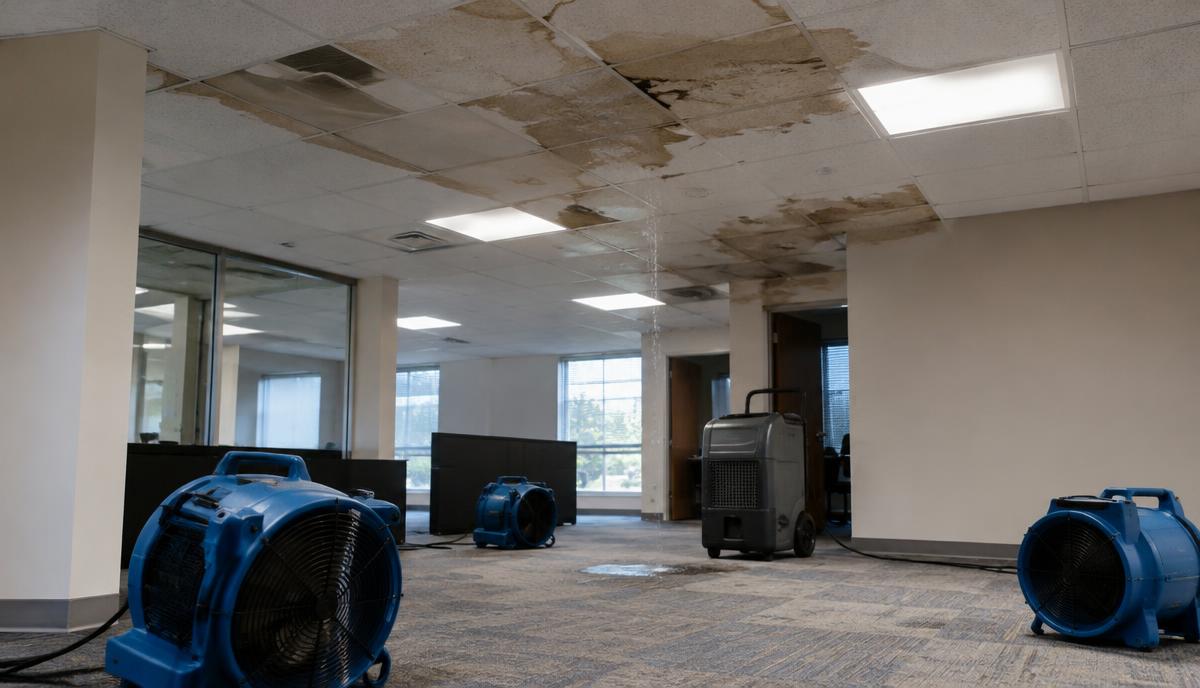
When water enters a commercial building, start with safety and access control rather than mops. Water can conceal electrical hazards, unstable ceilings and slippery surfaces. Keep people away from affected areas and follow the building’s emergency procedures. If there is immediate danger, a medical emergency or a suspected hazardous release, contact emergency services as appropriate.
Do not walk through standing water to reach a panel, equipment or a shutoff. Do not touch wet electrical equipment or assume a ceiling is safe because only a small stain is visible. In a Mission Valley office or an Oceanside retail property, the first operational decision is the same: establish a safe boundary and summon the right help before trying to protect merchandise or finishes.
Tip: Key takeaway: Restrict access first; property protection should never require entering an electrically or structurally unsafe area.
Report the incident and control the source safely
Notify property management and the designated emergency provider with the address, affected suite, observed conditions and safe access instructions. State whether water is actively entering and whether electrical equipment, ceiling sagging or contaminated water may be involved. Share observations rather than diagnosing the cause from the location of a stain.
If a known plumbing shutoff is safely accessible, authorized personnel may be able to stop a supply leak. Do not operate unfamiliar valves or impair fire protection systems without the appropriate emergency coordination. For suspected roof leaks, keep staff off wet roofs and ladders. Temporary weather protection should be assessed and installed by qualified personnel when conditions permit, not improvised during dangerous wind or rain.
- Provide the onsite contact and any entry restrictions.
- Identify essential operations affected by a shutdown.
- Record who was notified and when source-control steps occurred.
Treat unknown water as a potential contamination issue
Water from a broken supply line is not equivalent to sewage backup or runoff entering from outside. Even apparently clear water can become contaminated after contacting building materials or stored substances. Tell responders what is known about the source and avoid describing the area as safe without assessment. Keep occupants out of suspect areas.
Arrange qualified evaluation of the cleanup and drying needs, particularly where sewage, floodwater, chemicals or widespread concealed moisture may be involved. Do not direct general cleaning staff to handle hazardous contamination or spray treatments without a defined plan. Healthcare, food service and other sensitive occupancies may need additional procedures before spaces can be returned to use. Tenant operations should inform the assessment, not override it.
Document conditions without delaying urgent protection
When it is safe, photograph the affected areas, visible source and damaged contents before materials are moved. Capture wide views and close details, noting room locations and the time observed. Keep a simple incident log that distinguishes confirmed facts from suspected causes. Documentation should support decisions without delaying necessary safety measures or source control.
Notify the owner and insurer according to applicable policy requirements and retain relevant communications. Ask what documentation is needed and how damaged materials or contents should be handled. Coverage depends on the policy and incident; no maintenance provider can promise reimbursement. Preserve invoices, service reports and approved disposal records, and avoid discarding evidence casually when it can be retained safely.
Tip: Key takeaway: Capture safe, factual documentation while urgent mitigation proceeds; do not wait for perfect photographs before addressing active danger.
Assess the full moisture footprint and drying needs
The visible wet patch may represent only part of the damage. Water can travel through ceiling cavities, insulation and wall assemblies, then appear away from its entry point. Qualified restoration personnel may use moisture measurements and other assessment methods to define affected areas and select appropriate drying or removal steps. Visible dryness alone is not a reliable clearance standard.
Extraction, containment and drying should reflect the source, materials and occupancy. Fans are not automatically appropriate where contamination could spread. Avoid enclosing wet assemblies behind fresh paint, new ceiling tiles or replacement flooring. Ask for documented monitoring and the criteria used to decide that affected materials can remain, need removal or are ready for reconstruction. Prompt action matters, but an unsupported deadline should not replace verification.
Find the cause before rebuilding finishes
A roof leak, failed supply connection, blocked condensate drain and site-drainage problem require different corrections. Investigate the source and contributing conditions before authorizing permanent finish restoration. If multiple trades are involved, assign responsibility for connecting the diagnosis with the repair, then checking that the repair addresses the original problem.
San Diego’s November–March rains can expose roof and drainage defects after long dry periods. Coastal buildings in Carlsbad may also show corrosion at exposed components, while inland sites in El Cajon can experience HVAC condensate problems during heavy cooling use. These are inspection considerations, not diagnoses. Keep findings property-specific and verify repairs using appropriate methods rather than assuming local climate explains every water event.
- Document the identified cause and corrective scope.
- Check adjacent suites or floors when migration is possible.
- Confirm drying and required approvals before enclosing assemblies.
Coordinate reopening and reduce repeat incidents
Plan reopening with property management, affected tenants and relevant specialists. Confirm that hazards are addressed, damaged systems are evaluated and cleanup or drying criteria have been met. Where contamination or other conditions require additional assessment, obtain appropriate guidance before allowing normal use. A restored appearance is not enough to establish readiness.
After the incident, update shutoff maps, emergency contacts and access instructions. Review whether delayed reporting, blocked drainage or unclear responsibilities increased the impact. Add targeted inspections based on the documented cause, such as checking a repaired roof penetration or monitoring a previously leaking connection. Share relevant findings with tenants so future reports reach the right person promptly.
Tip: Key takeaway: Close the incident only after source repair, moisture management and safe-use decisions are documented.
How USCBI helps during a commercial water emergency
U.S. Commercial Building Inspections and Maintenance provides 24/7/365 emergency response for commercial properties across San Diego County. As one local partner, USCBI helps organize building repair and maintenance needs with a dedicated Service Manager and Service Coordinator for each client. Specific mitigation, restoration or specialist needs should be assessed for the incident rather than assumed to be interchangeable services.
Routine inspections and quality control also support follow-through after urgent conditions are addressed. For an active incident, request emergency assistance and describe the hazards without entering unsafe areas. For prevention planning, request a walkthrough to review roof and drainage concerns, shutoff access and recurring leak reports. Clear preparation cannot prevent every water event, but it can make the first decisions less uncertain.
Frequently asked questions
Should we turn off power when a building floods?
Water near electrical equipment requires immediate access restrictions and qualified assistance. Do not enter standing water or touch wet panels, switches or equipment to attempt a shutdown. Contact emergency services when there is immediate danger and involve the utility or qualified electrical personnel as appropriate. Safe isolation depends on the conditions and cannot be prescribed from a remote description.
Can our janitorial team dry the affected area?
Minor surface water and a significant building water event are not the same scope. Unknown sources, sewage, concealed moisture or water near electrical systems require qualified assessment. General cleaning should not substitute for restoration planning. Determine the source, affected materials and contamination concerns before deciding who can safely perform cleanup and what verification is needed.
How do we know when wet materials are ready to rebuild?
Ask the responsible restoration professionals for documented assessment, monitoring and completion criteria appropriate to the materials and incident. A wall can feel dry while concealed areas remain affected. Reconstruction should follow source repair and appropriate moisture management, with additional assessment where contamination or other hazards are suspected. Do not use appearance or a fixed waiting period alone.
Does USCBI respond outside normal business hours?
Yes. USCBI offers 24/7/365 emergency response for commercial properties across San Diego County. When requesting help, provide the exact location, safe entry instructions, active hazards and onsite contact. Availability does not remove the need to contact emergency services for immediate danger, and the response plan depends on site conditions and the assistance required.
About the author

Maurice Bedard
Chief Inspector & Owner · CCPI, CMI, CMR
Maurice Bedard is the chief inspector and owner of U.S. Commercial Building Inspections and Maintenance, a Certified Commercial Property Inspector with more than 25 years in commercial real estate, construction, restoration and remediation across Southern California. He has personally inspected office, retail, industrial, multifamily and institutional buildings for buyers, owners, brokers and lenders throughout San Diego, Orange, Los Angeles, Riverside and San Bernardino Counties.
Written and reviewed by Maurice Bedard
More about our inspectors · Questions about your building? Call 619-473-2133.