
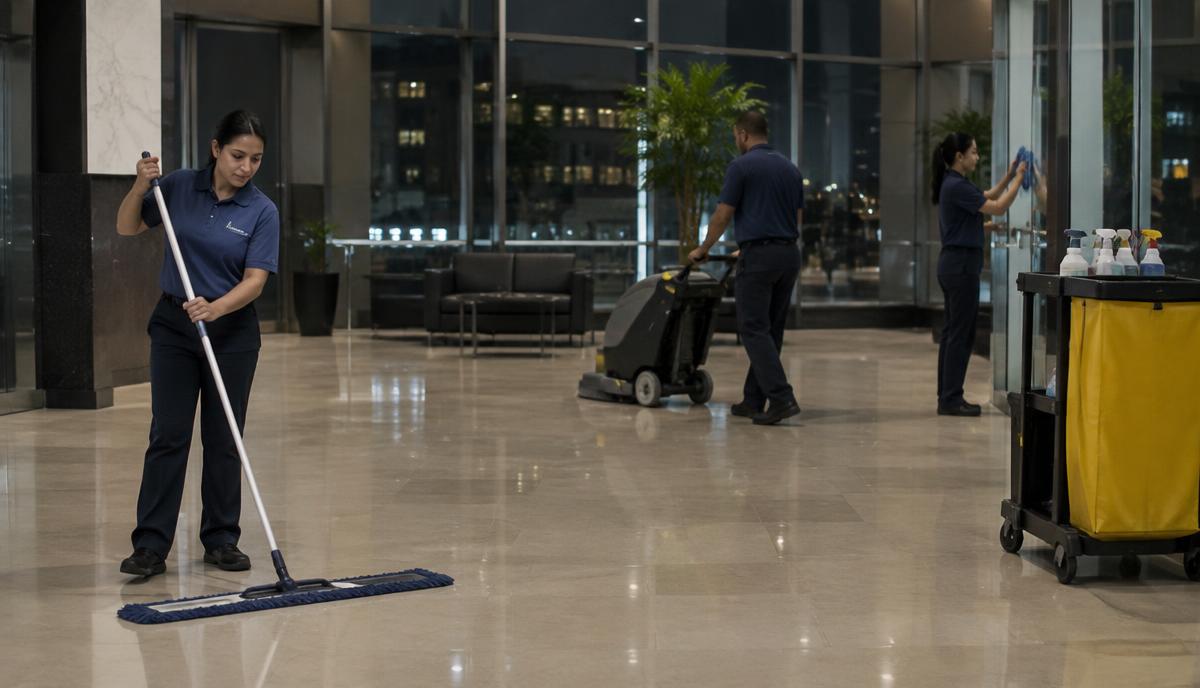
Choose cleaning frequency by use, not square footage alone
Commercial building cleaning should follow occupancy, traffic, activities, and the consequences of missed work. A lightly occupied office in La Mesa does not need the same schedule as a busy retail property in Mission Valley. Even within one building, shared restrooms may need attention several times during business hours while a seldom-used conference room needs less frequent service. Start with an area-by-area assessment instead of purchasing a blanket visit count.
Separate routine cleaning, disinfection where appropriate, periodic floor care, and exterior work. These tasks use different methods and should not be treated as interchangeable. Identify tenant obligations, landlord responsibilities, secure areas, and access windows. A clear scope lets the property manager evaluate whether the right tasks were completed rather than assuming that a cleaner’s presence means every space received suitable attention.
Set a daily baseline for busy common areas
For regularly occupied commercial buildings, plan frequent checks of entrances, common restrooms, waste stations, and obvious spills. Daily service is often a reasonable starting point for busy shared areas, while some spaces need additional attention during operating hours. Overflowing waste, depleted restroom supplies, and tracked-in debris are signals that the schedule is not matching actual use. Staff should have a clear process for reporting conditions between planned visits.
Cleaning frequency should increase when events, deliveries, or seasonal occupancy create heavier traffic. A retail center in Chula Vista may need attention before opening and again after a busy lunch period. That does not mean every surface requires the same treatment at every visit. Prioritize safety, sanitation, and visible soil, then schedule detailed work so it is not continually displaced by immediate needs.
- Check entry flooring and mats for moisture, debris, curling edges, and trip hazards.
- Inspect shared restrooms for cleanliness, supplies, leaks, and fixtures needing repair.
Tip: Key takeaway: Busy shared areas need condition checks between cleaning visits, not just a recurring appointment.
Match office and specialty-space schedules to actual activity
An occupied office may begin with service several times each week, then adjust based on waste, restroom use, food areas, and employee attendance. Hybrid occupancy makes old assumptions unreliable: a nearly empty Monday and a busy Wednesday may need different coverage. Keep a separate checklist for kitchens and breakrooms, where food waste and spills should not wait for a general dusting visit.
Medical, food-service, laboratory, and other specialized environments need requirements appropriate to their activities. General commercial cleaning is not a substitute for a facility’s infection-control procedures, regulated sanitation processes, or trained handling of hazardous materials. Confirm boundaries before work begins. In industrial properties in San Marcos or National City, separate office and restroom cleaning from production-area tasks that require specific equipment, shutdown coordination, or safety controls.
Schedule periodic floor, glass, and detail cleaning
Routine vacuuming and mopping do not eliminate the need for periodic deeper work. Review floor materials, manufacturer care instructions, wear patterns, and tenant expectations before setting frequencies for carpet extraction or other restorative tasks. Using the wrong product or an overly aggressive method can damage finishes. Plan enough drying time and safe access arrangements so the cleaning process does not create a new slip or trip hazard.
Interior glass, high dusting, baseboards, and less accessible surfaces need their own rotation. Inspect results rather than assuming that monthly or quarterly work is automatically appropriate. Coastal storefront glass in Del Mar can show marine residue quickly, while an inland property near active construction may accumulate dust. Put periodic tasks on the calendar and document completion so they do not disappear behind the routine nightly checklist.
Adjust exterior cleaning for coast, inland dust, and rain
Coastal properties in Oceanside, Carlsbad, and Encinitas often face marine residue, moisture, and windblown debris. Inland buildings in Escondido and El Cajon may see more dust and dry-season accumulation. Inspect entrances, walkways, exterior glass, and service areas to determine a workable cleaning cycle. The appropriate interval depends on exposure and use, not a fixed coastal or inland formula.
Before and during the November–March rains, increase attention to entrance mats, wet-floor response, and debris that may obstruct drainage routes. Exterior washing requires suitable surface methods and a plan to protect landscaping, pedestrians, and nearby equipment. Confirm applicable stormwater requirements and prevent wash water or pollutants from entering storm drains improperly. Schedule work during safe weather and coordinate with tenants when entries or parking areas need temporary restrictions.
Tip: Key takeaway: Exterior cleaning should address local exposure while protecting pedestrians, surfaces, and stormwater drainage.
Decide when daytime coverage is worth adding
A day porter can be useful when conditions deteriorate long before the next scheduled cleaning visit. Common triggers include heavy public traffic, frequent restroom use, recurring food spills, and multiple tenant deliveries. The role should have a defined route and priorities, with a process for urgent requests. Daytime coverage should supplement, not quietly replace, the deeper work that is easier to complete outside business hours.
Before adding coverage, review whether existing visits are correctly timed and whether tasks are being completed. A supply shortage may come from poor stocking procedures rather than insufficient labor hours. Ask tenants when problems occur and compare those reports with inspection notes. Trial adjustments against specific goals, such as keeping entry areas clear through a busy afternoon, rather than assuming that more visits alone will improve outcomes.
Use inspections to refine the cleaning specification
A useful cleaning inspection evaluates condition and completion, not just fragrance or appearance from the doorway. Check representative restrooms, entries, floors, and waste areas against the agreed scope. Record deficiencies with location and timing so the team can distinguish missed work from conditions that developed after the visit. Include a method for confirming that corrective work was completed.
Cleaning inspections can also reveal maintenance problems: recurring wet floors, damaged grout, leaking fixtures, and failing door seals may keep an area dirty despite appropriate cleaning. Send those findings into the repair workflow rather than asking cleaners to compensate indefinitely. Review the schedule when tenants change, occupancy increases, or seasonal weather alters traffic patterns. A building-specific program should evolve while keeping responsibilities and approval requirements clear.
Tip: Key takeaway: When an area repeatedly fails inspection, investigate both cleaning performance and the building conditions behind the problem.
How USCBI helps coordinate cleaning and building upkeep
U.S. Commercial Building Inspections and Maintenance provides commercial-only property repair and maintenance across San Diego County. With one local partner, property teams can connect cleaning observations to building repairs instead of allowing recurring leaks, damaged surfaces, or entry problems to remain separate complaints. Each client has a dedicated Service Manager and a dedicated Service Coordinator to support a clear plan and ongoing communication.
Routine inspections and quality control help assess whether the agreed work is meeting the property’s needs. USCBI also offers 24/7/365 emergency response for urgent building issues, distinct from the routine cleaning calendar. To establish a practical starting point, request a walkthrough with USCBI. Review shared areas, tenant schedules, access limitations, coastal or inland exposure, and current problem spots before choosing the cleaning frequency and maintenance priorities.
Frequently asked questions
Does every commercial building need nightly cleaning?
No. Nightly service can suit busy offices and retail common areas, but lightly occupied spaces may need a different schedule. Restrooms, food areas, and waste removal still require attention appropriate to actual use. Start with occupancy and condition checks, then adjust. A reduced visit schedule should not leave sanitation needs or spills unattended between appointments.
How often should commercial windows be cleaned?
The right interval depends on exposure, visibility, access, and tenant expectations. Coastal marine residue, irrigation overspray, traffic, or nearby construction can shorten the useful interval between visits. Inspect representative windows and set a schedule from observed conditions. Confirm safe access methods and distinguish exterior glass cleaning from frame repairs, failed seals, or water intrusion investigations.
Is disinfection the same as routine cleaning?
No. Cleaning removes soil and debris, while disinfection uses appropriate products and procedures to address specified microorganisms on suitable surfaces. Follow product labels, including required contact time and compatibility precautions. Specialized facilities may have additional protocols. The scope should identify when disinfection is appropriate rather than assuming every surface needs the same treatment at every visit.
Can cleaning and repair needs be managed together?
Yes. Coordinating the two helps address conditions that repeatedly undermine cleanliness, such as a leaking fixture or damaged entry surface. Keep cleaning tasks and repair authorizations distinct so responsibilities remain clear. USCBI’s commercial-only approach includes dedicated service contacts, routine inspections, and quality control, allowing the property team to discuss both needs through one local partner.
About the author

Maurice Bedard
Chief Inspector & Owner · CCPI, CMI, CMR
Maurice Bedard is the chief inspector and owner of U.S. Commercial Building Inspections and Maintenance, a Certified Commercial Property Inspector with more than 25 years in commercial real estate, construction, restoration and remediation across Southern California. He has personally inspected office, retail, industrial, multifamily and institutional buildings for buyers, owners, brokers and lenders throughout San Diego, Orange, Los Angeles, Riverside and San Bernardino Counties.
Written and reviewed by Maurice Bedard
More about our inspectors · Questions about your building? Call 619-473-2133.