
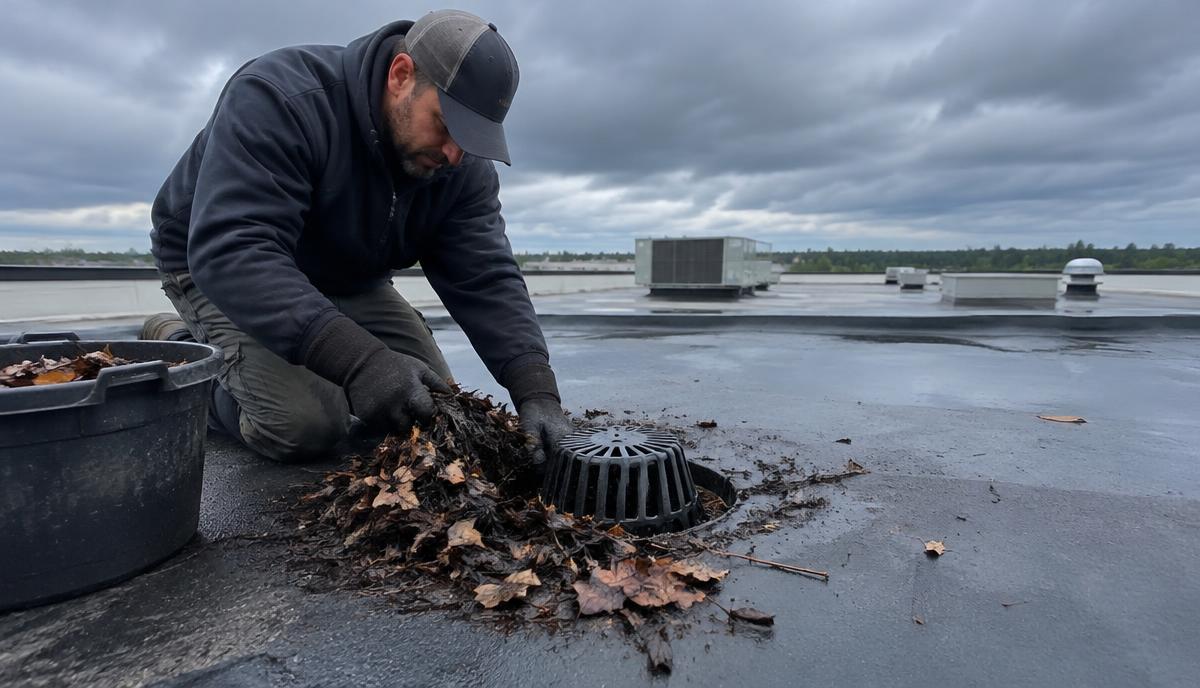
Start before the first storm is forecast
Preparing a commercial roof for San Diego’s rainy season works best as a planned maintenance process, not a last-minute search for someone to clear a drain. The county commonly sees its main seasonal rains from November through March. Schedule assessment early enough to review findings, approve corrections and accommodate weather-dependent work before sustained rain arrives.
Long dry periods can conceal defects that only become obvious under runoff. Roof penetrations, drainage connections and prior repair areas deserve attention even if tenants have not reported a recent leak. Build a preparation plan for the actual property, whether it is a coastal retail center in Encinitas, an office in Santee or a warehouse in Otay Mesa. No checklist guarantees a leak-free winter, but preparation improves visibility.
Collect records and arrange safe roof access
Review last season’s leak reports, previous inspection photographs and unresolved repair recommendations. Mark affected interior rooms and match them to a roof plan where available. Water may travel before becoming visible, so the map is a starting point for investigation rather than a direct diagnosis. Include reports from top-floor tenants and staff who see service spaces regularly.
Arrange access with qualified personnel using appropriate fall protection and safe-work procedures. Roof edges, skylights and fragile surfaces can be hazardous even in dry weather. Do not assign untrained staff to roof work or encourage inspections during rain or high winds. Confirm keys, escorts and equipment access restrictions in advance so the visit can focus on conditions rather than preventable entry delays.
- Share known roof-system and warranty information.
- Identify recent rooftop equipment work and new penetrations.
- Record open items carried forward from earlier inspections.
Inspect the whole drainage path
Look beyond the drain opening. The drainage system includes roof slopes, primary drains, gutters, scuppers, secondary overflows, downspouts and discharge points. Debris at any point can interfere with performance. A clear roof surface does not establish that a concealed line is unobstructed, and a clean drain basket is not proof that runoff can reach its intended destination.
Have qualified personnel remove debris and evaluate blockages without damaging roof materials or creating uncontrolled water discharge. Keep secondary overflow paths functional; they are not spare outlets to be sealed or repurposed. If persistent ponding, overflow staining or repeated blockages are found, investigate the cause and appropriate correction rather than treating every occurrence as a housekeeping issue.
- Check discharge areas near entries, loading zones and walkways.
- Document sediment patterns that suggest water has been collecting.
- Address nearby debris sources where practical and appropriate.
Tip: Key takeaway: Rain readiness depends on a continuous drainage path, not just a clean-looking roof drain.
Check flashings, penetrations and equipment interfaces
Roof details often deserve closer attention than the open field. Inspect accessible flashings at parapets, walls, curbs and penetrations for separation, damage or deterioration. Review prior repairs and areas disturbed by equipment service. Any corrective material needs to be compatible with the existing roof system and installed under suitable conditions.
Coordinate with HVAC and other rooftop service providers where their equipment or piping interfaces with the roof. Condensate drainage problems and unsecured service-related materials should not be ignored simply because they involve another trade. Avoid indiscriminate sealant application; covering a symptom without understanding the assembly can complicate diagnosis and future work. Ask for photographs and a defined corrective scope instead of a vague promise to reseal everything.
Adapt the inspection to coastal and inland exposure
Coastal properties in Oceanside, Carlsbad and Encinitas may show salt-related corrosion at exposed metal components, fasteners and equipment supports. Inspect observed deterioration and have qualified personnel determine appropriate corrective action. Do not assume that cosmetic rust and a compromised component are equivalent; condition and function need to be evaluated.
Inland buildings in Santee, El Cajon and Escondido face different heat exposure and potentially heavier cooling use around rooftop equipment. Thermal movement and repeated service traffic are useful inspection considerations. Across the county, nearby trees, construction dust and windblown debris can affect drainage. Adjust the inspection focus to what is actually present, while keeping a common record format so findings can be compared between visits and properties.
Prioritize repairs and prepare tenant communications
Classify findings by urgency and consequence. Active leaks, drainage restrictions and conditions that could affect safe operations need prompt review. Other defects may be scheduled or monitored based on qualified recommendations. Require clear descriptions of what will be corrected and what remains outside the scope. If a larger project is needed, distinguish interim protection from the permanent solution.
Coordinate work windows, roof access and potential tenant impacts before mobilization. Tell occupants how to report new staining, drips or unusual odors, and ask them not to touch wet electrical equipment or enter restricted areas. Keep sensitive stock and equipment planning separate from emergency improvisation. Where possible, document agreed precautions before rain is in the immediate forecast.
- Confirm authorization contacts and emergency access arrangements.
- Track approved corrections to verified completion.
- Retain photographs of repaired details and unresolved conditions.
Tip: Key takeaway: An inspection protects little unless its urgent findings become approved, completed and checked repairs.
Use the first storms to verify performance safely
During rain, observe accessible interior areas without entering unsafe spaces. Ask tenants to report the time, location and visible extent of water entry promptly. Sagging ceilings, water near electrical equipment or rapidly worsening conditions require access restrictions and appropriate emergency assistance. Do not send staff onto a wet roof to search for a leak.
When weather and access conditions permit, arrange a qualified follow-up to investigate new concerns and check drainage performance. Compare observations with the pre-season record. A newly stained ceiling can indicate a remaining defect, but it can also reflect water migration from another location; diagnosis still matters. Update the maintenance plan after significant storms or recurring debris accumulation rather than assuming one fall visit completes the season’s needs.
Tip: Key takeaway: Verify the preparation through safe storm observations and follow-up, not through risky roof access during rain.
How USCBI helps prepare commercial roofs for rain
U.S. Commercial Building Inspections and Maintenance works exclusively with commercial properties across San Diego County. One local partner, supported by a dedicated Service Manager and Service Coordinator for each client, helps keep maintenance priorities, scheduling and follow-up organized. Routine inspections and quality control support a practical connection between roof observations and the work needed to address them.
USCBI also provides 24/7/365 emergency response for urgent building issues, including problems that arise outside a planned maintenance visit. Request a walkthrough before the rainy season to discuss roof history, drainage concerns and open repair items. Bring previous reports and tenant leak locations if available, and use the conversation to establish preparation priorities suited to your building rather than assuming a generic checklist covers every condition.
Frequently asked questions
When should we schedule a pre-rain roof inspection?
Schedule early enough before the November–March rainy period to review findings, obtain approvals and complete appropriate corrections. Exact timing depends on the property, access and likely work. Waiting until a storm is forecast can limit safe access and repair opportunities. A pre-season visit should be followed by suitable checks when storms reveal new concerns.
Can our staff clear roof drains themselves?
Only appropriately trained and authorized personnel with safe access and required protections should perform roof work. Roof edges, skylights and fragile areas create hazards even when conditions look calm. Staff can report accessible interior symptoms and visible ground-level drainage issues without climbing onto the roof. Leave wet-weather roof investigations and unfamiliar drainage problems to qualified providers.
What if we find water standing on a low-slope roof?
Document the location and observations through a safe, qualified inspection. Persistent ponding can relate to blocked drainage, slope or other assembly conditions and deserves evaluation. Do not cut new outlets, alter drains or add material without understanding the system and applicable requirements. The appropriate correction depends on the cause, not simply the presence of water.
Does a pre-season inspection eliminate emergency leak calls?
No. Preparation can identify existing defects and drainage problems, but storms, new damage and concealed conditions can still cause leaks. Keep reporting contacts, safe access instructions and authorization procedures current. USCBI offers 24/7/365 emergency response for commercial properties, while immediate threats to life or safety still require appropriate emergency services and access restrictions.
About the author

Maurice Bedard
Chief Inspector & Owner · CCPI, CMI, CMR
Maurice Bedard is the chief inspector and owner of U.S. Commercial Building Inspections and Maintenance, a Certified Commercial Property Inspector with more than 25 years in commercial real estate, construction, restoration and remediation across Southern California. He has personally inspected office, retail, industrial, multifamily and institutional buildings for buyers, owners, brokers and lenders throughout San Diego, Orange, Los Angeles, Riverside and San Bernardino Counties.
Written and reviewed by Maurice Bedard
More about our inspectors · Questions about your building? Call 619-473-2133.