Sign one: repeated hot and cold complaints
A single uncomfortable desk does not prove a rooftop HVAC unit has failed, but repeated complaints deserve investigation. Record the affected suite, time of day, thermostat setting, occupancy, and whether nearby spaces have the same problem. A west-facing office in Poway may become uncomfortable in the afternoon for different reasons than a shaded storefront in Carlsbad. Good observations help distinguish a control issue from an equipment or distribution problem.
Check only what is safely accessible: blocked supply grilles, furniture against returns, and unexpected thermostat schedule changes. Do not let staff open equipment panels or climb onto the roof. If comfort remains poor after obvious obstructions are addressed, request professional diagnosis. Persistent uneven temperatures can involve airflow, controls, ductwork, equipment capacity, or changing tenant loads rather than a single failed part.
Sign two: the unit starts and stops unusually often
Short cycling means equipment repeatedly runs for brief periods instead of operating in its expected pattern. Causes can include control faults, airflow restrictions, protective shutdowns, or equipment sizing issues. Repeated starts can stress components, but the observation alone does not identify the defective part. Note when cycling occurs and whether it affects cooling, heating, or both, then share that information with the service team.
Avoid repeatedly resetting breakers or bypassing controls to keep a tenant comfortable. A protective device may be interrupting operation for a reason that needs investigation. In inland communities such as Santee and Escondido, a marginal unit may reveal its problems during hotter afternoons. Compare the current behavior with previous operation and report a sudden change rather than waiting for complete loss of cooling.
Tip: Key takeaway: Repeated shutdowns call for diagnosis, not repeated resets or bypassed safety controls.
Sign three: new squealing, grinding, or vibration
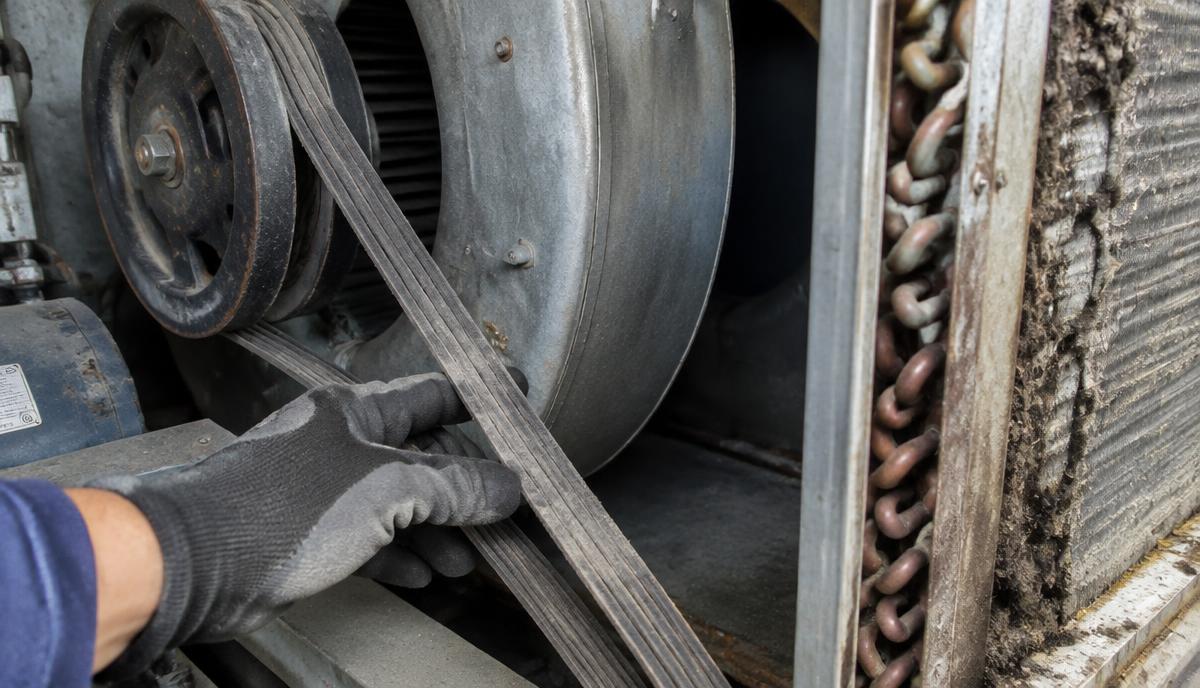
A rooftop unit normally produces operating noise, but a new sound or noticeable change should be documented. Squealing can accompany belt or bearing problems on applicable equipment; grinding, rattling, and banging can have several mechanical causes. Vibration transmitted into occupied space may also involve loose components or supports. Describing the sound is useful, but it is not enough to authorize a specific repair without inspection.
Record when the noise begins, whether it happens at startup or continuously, and which suites hear it. A brief recording from a safe occupied area may help explain an intermittent problem. Keep people away from visibly unstable equipment and ask the service provider whether operation should stop. Do not tighten rooftop components, remove guards, or attempt belt adjustments without appropriate training and safe access.
Sign four: water stains, drips, or moisture near the unit
New ceiling stains below rooftop equipment warrant prompt attention even when cooling still works. Possible causes include a blocked condensate line, damaged drain pan, insulation problems, or leakage around a roof curb. During San Diego’s November–March rains, roof leakage may resemble an HVAC drainage issue. The repair should follow the source of the water rather than simply replacing stained ceiling tiles.
Protect occupants by keeping them away from wet floors and affected ceilings. If water is near electrical equipment, do not touch switches or attempt cleanup in the affected area; arrange qualified assistance. Photograph the location and note whether moisture appears during equipment operation, rainfall, or both. That timing can help coordinate HVAC and roofing investigations without prematurely blaming one system.
Tip: Key takeaway: Water below a rooftop unit requires source investigation, not just cosmetic ceiling repair.
Sign five: energy use rises without an obvious explanation
A higher utility bill is a reason to investigate, not proof that a rooftop unit needs replacement. Compare billing periods, rates, outdoor conditions, occupancy, and operating hours before drawing conclusions. Extended tenant hours, additional computers, or a thermostat left in an override mode can change consumption. Where useful data is available, compare usage rather than total cost alone to separate rate changes from operating changes.
If those factors do not explain the increase, ask for checks of airflow, coil condition, controls, and operating performance. A system can maintain acceptable temperatures while running longer because something is wrong. Coastal buildings in Encinitas and Oceanside may also need closer attention to corrosion and fouled heat-transfer surfaces. Use documented findings to decide on corrective work instead of assuming that cleaning or replacement will produce a particular savings figure.
Sign six: ice appears where it should not
Visible ice on refrigerant piping or cooling components is not a sign that the system is working extra well. Restricted airflow, control issues, and refrigerant-related problems are among the possible causes. Continuing to force operation can worsen the situation. Report the condition promptly, describe whether airflow has dropped, and ask the service provider for safe operating instructions while assistance is arranged.
Do not chip away ice, apply improvised heat, or add refrigerant based on appearance. These actions can damage equipment or create additional hazards. A technician needs to identify the underlying cause and may need the equipment thawed before completing certain checks. Note recent filter changes, previous freezing, or related service visits so the investigation considers recurring conditions rather than treating each episode as a separate event.
Sign seven: unusual odors accompany operation
Burning, electrical, fuel-like, or persistent musty odors should never be dismissed as routine maintenance reminders. If there is smoke, a suspected fire, a gas odor, or an immediate threat to occupants, follow the building’s emergency procedures and contact emergency services or the appropriate utility. Keep occupants away from the affected area and do not investigate by opening electrical or heating compartments.
A musty odor can have several sources, including moisture problems unrelated to the rooftop unit. Document when the odor appears and which areas are affected without assuming that duct cleaning alone will solve it. Qualified investigation should address the source and any water intrusion. Where an urgent shutdown is necessary, communicate with tenants about affected areas and next steps rather than repeatedly restarting equipment to see whether the odor returns.
Tip: Key takeaway: Treat smoke, suspected gas, and electrical burning odors as safety concerns before comfort complaints.
How USCBI helps turn symptoms into an action plan
U.S. Commercial Building Inspections and Maintenance supports commercial-only properties throughout San Diego County, including Chula Vista, Carlsbad, and Poway. One local partner can help connect rooftop HVAC symptoms with related roof, drainage, and building maintenance issues. Each client has a dedicated Service Manager and a dedicated Service Coordinator, giving repair planning and communication clear points of contact.
USCBI combines routine inspections and quality control with 24/7/365 emergency response. Emergency availability is not a promise that every repair can be completed immediately; access, diagnosis, parts, and safe working conditions still matter. For recurring problems, request a walkthrough to review unit history, current symptoms, and repair priorities. A building-specific discussion can help distinguish work needed now from maintenance adjustments and longer-term replacement planning.
Frequently asked questions
Can a rooftop unit still cool while needing repair?
Yes. A unit may maintain temperature while running longer than usual, cycling repeatedly, leaking condensate, or developing unusual noise. These symptoms can indicate a developing problem even before tenants lose cooling. Record changes and arrange diagnosis rather than relying only on thermostat readings. Continued operation should follow professional guidance when safety or equipment damage is a concern.
Should staff go onto the roof to inspect a noisy unit?
Untrained staff should not access rooftop equipment to investigate noises. Roof access, fall exposure, moving components, and electrical hazards require appropriate precautions. Record what occupants can safely observe from occupied areas and provide access information to the service team. A recording can support the investigation, but it does not replace a qualified inspection of the equipment.
Does a ceiling stain mean the HVAC drain is blocked?
A blocked condensate drain is one possibility, but roof flashing, curbs, piping, and other sources can produce similar stains. Note whether the stain appears during rain, cooling operation, or both. Protect the occupied area and request investigation. Repairing the visible finish without identifying and correcting the source can leave moisture damage continuing above the ceiling.
When is replacement more sensible than another repair?
The decision should consider condition, recurring failures, component availability, repair scope, operating needs, and the unit’s ability to serve the space. Age alone is not a complete decision rule. Ask for a written explanation of the immediate repair, remaining concerns, and replacement considerations. Avoid committing to major equipment work based solely on one symptom or a utility bill increase.
About the author

Maurice Bedard
Chief Inspector & Owner · CCPI, CMI, CMR
Maurice Bedard is the chief inspector and owner of U.S. Commercial Building Inspections and Maintenance, a Certified Commercial Property Inspector with more than 25 years in commercial real estate, construction, restoration and remediation across Southern California. He has personally inspected office, retail, industrial, multifamily and institutional buildings for buyers, owners, brokers and lenders throughout San Diego, Orange, Los Angeles, Riverside and San Bernardino Counties.
Written and reviewed by Maurice Bedard
More about our inspectors · Questions about your building? Call 619-473-2133.