
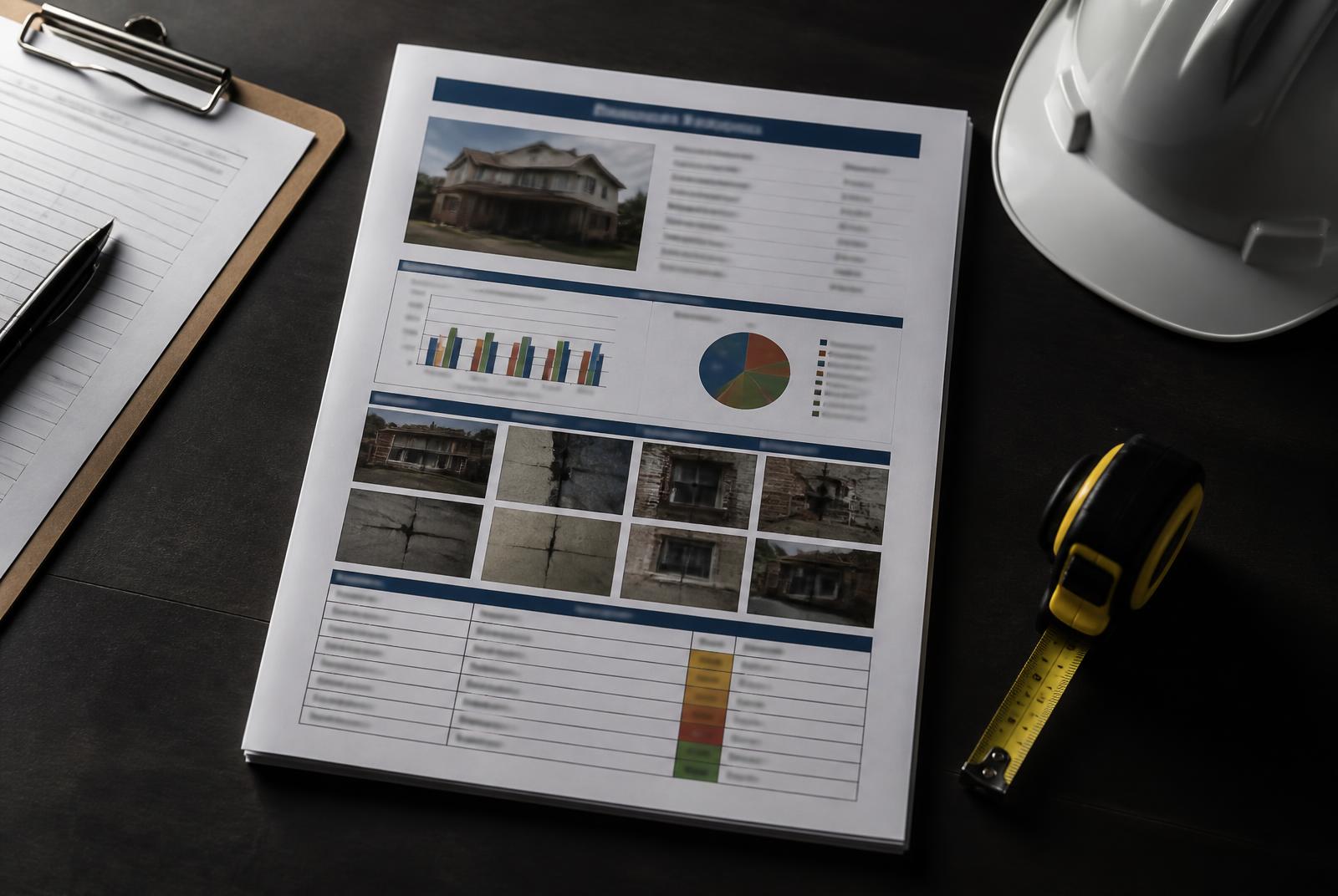
Quick answer: A commercial property inspection is a visual evaluation of a building's systems that tells a buyer what is wrong. A property condition assessment (PCA) does that too, but follows the ASTM E2018 standard and adds what it will cost: an immediate repair table and a 10–12 year (or loan-term) replacement reserve schedule. If a lender is involved, you almost always need a PCA.
Buyers, brokers and even lenders use "inspection" and "PCA" interchangeably, and that confusion costs money. Order the wrong report and you either pay for a second site visit or walk into closing without the numbers you need to negotiate. This guide explains how the two reports differ, who requires each one, and how to decide before you sign an engagement letter. It is based on how we scope work every week for commercial property inspections in San Diego and across Southern California.
What a commercial property inspection is
A commercial property inspection is a visual, non-invasive walk-through of the building by a qualified commercial inspector. The inspector looks at the roof, structure, building envelope, HVAC, plumbing, electrical, life safety features, site drainage, parking and accessible routes, then documents deficiencies with photographs and recommendations.
The goal is practical: tell the buyer or owner what condition the building is in, what is failing, what is a safety concern and what deserves a specialist's opinion. There is no single mandatory national standard for this kind of report, so scope varies between firms. A good inspection report states its scope clearly, lists what was not accessible, and ranks findings by urgency.
Typical clients include owner-users buying their own building, tenants signing a triple-net lease who will inherit maintenance responsibility, cash investors, and owners who want a baseline before planning repairs.
What a property condition assessment is
A PCA is a due diligence report built around ASTM E2018, the Standard Guide for Property Condition Assessments: Baseline Property Condition Assessment Process. The standard defines a walk-through survey, a review of available documents, interviews with people who know the building, and a written Property Condition Report.
Three things make a PCA different in practice:
- Document review and interviews. The assessor requests permits, certificates of occupancy, prior reports, warranties, service contracts and known open code violations, and interviews the owner or property manager.
- Opinions of probable cost. Deficiencies are converted into dollar figures. Immediate costs (life safety, code and material physical deficiencies) are separated from short-term and long-term costs.
- A replacement reserve schedule. Each major system gets an estimated useful life and remaining useful life, and the report projects when it will need replacement over the evaluation period, often the loan term plus a cushion.
Learn more on our property condition assessment service page.
Side-by-side comparison
| Factor | Commercial property inspection | Property condition assessment |
|---|---|---|
| Standard | Firm's own standards of practice | ASTM E2018 (plus lender scope) |
| Main question answered | What is wrong with the building? | What is wrong, and what will it cost now and over time? |
| Document review | Optional / limited | Required component |
| Cost estimates | Usually not included | Immediate and reserve cost tables |
| Reserve schedule | No | Yes, typically 10–12+ years |
| Who usually orders | Owner-users, tenants, cash buyers | Lenders, institutional buyers, investors |
| Lender reliance | Rarely accepted | Commonly issued with reliance letter |
Which one should you order?
Order a PCA when
- A bank, credit union, SBA lender, CMBS lender or agency lender is financing the purchase or refinance.
- You are an investor underwriting cash flow and need a capital expense forecast.
- You own several buildings and want consistent, comparable cost data across the portfolio.
- You need to budget reserves for an HOA, association or long-term hold. For that, also consider a capital needs assessment and reserve study.
A commercial inspection may be enough when
- You are paying cash for a small building you will occupy.
- You are a tenant inheriting roof, HVAC or parking responsibility under a NNN lease and want to know what you are signing up for.
- You want a focused evaluation of one system, such as a commercial roof inspection before a lease renewal.
Where the two reports overlap
The field work is similar. In both cases a qualified inspector walks the roof, mechanical rooms, electrical rooms, units and site. In both cases the report should be written for a decision maker, not filled with boilerplate. The difference is what happens after the site visit: a PCA turns observations into a financial tool.
That financial tool matters most when big systems are near the end of their life. A roof with five years left and twelve rooftop HVAC units installed the same year can represent hundreds of thousands of dollars in near-term capital spending. An inspection will say "aged"; a PCA will say "replace in years 3–5 at an estimated cost of X," which is a number you can put in a price negotiation or a loan reserve.
Common scoping mistakes
- Not asking the lender first. Many lenders have their own PCA scope, format and approved vendor lists. Ask for it in writing before ordering.
- Forgetting the reliance letter. A report addressed only to the buyer may not be acceptable to the lender.
- Skipping environmental. A PCA does not cover contamination. Most lenders also require a Phase I Environmental Site Assessment.
- Ordering too late. Due diligence windows in commercial deals are short. Book the site visit in the first week of escrow.
Bottom line
If money is borrowed or future capital costs drive your decision, order a PCA. If you are a cash owner-user or tenant who mainly needs to know what is wrong, a commercial property inspection may do the job at a lower cost. When in doubt, tell us who is financing the deal and how long you plan to hold the property, and we will recommend the right scope.
A Southern California example
Two buyers look at similar 20,000 square foot industrial buildings in the Inland Empire. Buyer A is an owner-user paying cash who wants to move a distribution business in within 60 days. Buyer B is an investor financing 65% of the price with a regional bank and plans to hold for ten years. Buyer A's main questions are practical: does the roof leak, will the dock doors and electrical service support operations, are there safety issues to fix before employees move in? A commercial property inspection answers those questions efficiently.
Buyer B's questions are financial. The bank will ask what must be repaired before closing and how much to reserve each month. The investor wants to know whether the roof, HVAC and paving will need replacement during the hold and how that affects returns. Only a PCA, with its cost tables and reserve schedule, answers those questions in a form the lender accepts.
What both reports should never be
Neither report should be a checklist of generic disclaimers. Look for specific photographs, locations, ages and quantities: how many rooftop units, what year each was manufactured, how many square feet of roof show ponding, which panels have deficiencies. Vague language such as "HVAC appears functional" or "roof is in fair condition" gives you nothing to negotiate with. Ask any firm for a sample report before you hire them, and compare how clearly findings are prioritized.
How scope affects schedule
A focused inspection can usually be scheduled quickly, while a PCA needs extra time for document requests, interviews and cost estimating. In both cases, we typically deliver the written report within 1–3 days of the site visit for standard properties. Waiting for missing documents from a seller is the most common cause of delay, so request them as soon as escrow opens.
Frequently asked questions
Is a property condition assessment the same as a commercial inspection?
No. Both evaluate the physical building, but a PCA follows ASTM E2018 and adds an opinion of probable cost table for immediate repairs and a replacement reserve schedule. A commercial inspection is usually a narrower visual condition report for the buyer.
Which one does my lender want?
Most commercial lenders, SBA lenders and agency lenders (Fannie Mae, Freddie Mac) require a PCA, often with a reliance letter naming the lender. Confirm the lender's scope of work before ordering.
Is a PCA more expensive?
Usually, because it includes document review, interviews, cost estimating and a longer report. Pricing depends on building size, type, number of buildings and lender requirements.
Can I upgrade an inspection to a PCA later?
Often yes, if the field work captured the required data. It is cheaper to decide the scope before the site visit, so ask your lender first.
How long does each take?
For most properties we deliver reports in 1–3 days after the site visit. Large portfolios or lender-specific formats can take longer.
Get a scope and proposal
U.S. Commercial Building Inspections serves San Diego, Orange, Los Angeles, Riverside and San Bernardino counties. Call 619-473-2133 or request a quote and we will reply the same or next business day with a scope and proposal.
Related inspection services
About the author

Maurice Bedard
Chief Inspector & Owner · CCPI, CMI, CMR
Maurice Bedard is the chief inspector and owner of U.S. Commercial Building Inspections, a Certified Commercial Property Inspector with more than 25 years in commercial real estate, construction, restoration and remediation across Southern California. He has personally inspected office, retail, industrial, multifamily and institutional buildings for buyers, owners, brokers and lenders throughout San Diego, Orange, Los Angeles, Riverside and San Bernardino Counties.
Written and reviewed by Maurice Bedard · Published September 29, 2026 · Updated September 29, 2026
More about our inspectors · Questions about your building? Call 619-473-2133.